


What's Happening?
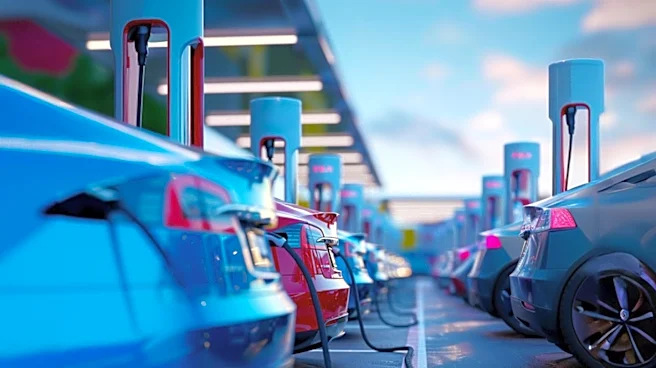
Tesla's Supercharger network has lost its top position in the J.D. Power U.S. Electric Vehicle Experience (EVX) Public Charging Study for the first time in six years, falling to fourth place. IONNA, a joint venture formed in 2024 by eight global automakers
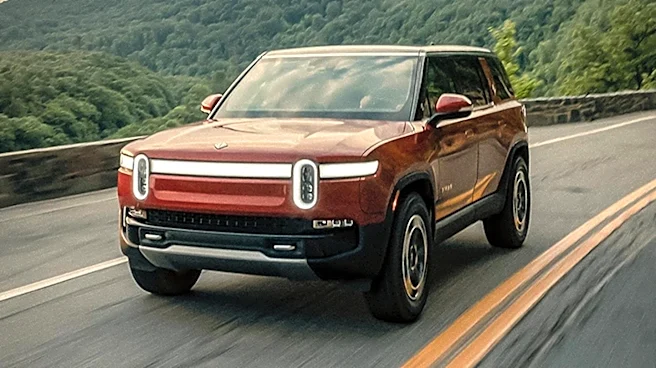
including BMW, General Motors, and Mercedes-Benz, secured the first spot with a score of 807 out of 1,000. The Mercedes-Benz Charging Network followed in second place with 797 points, and Rivian Adventure Network ranked third with 755. Tesla's score was 701, a slight decrease from 709 last year, though still above the segment average of 666. Despite Tesla's decline, the study indicates an overall improvement in the U.S. public fast-charging experience, with satisfaction increasing by 12 points year-over-year to 666, and improvements noted in charger availability, location safety, and charging costs.
Why It's Important?
This shift in J.D. Power rankings signifies a growing competitive landscape in the electric vehicle charging infrastructure sector within the U.S. Tesla's long-standing dominance in charging network satisfaction is being challenged by new entrants and established automakers collaborating to build robust charging solutions. This development is crucial for the broader adoption of EVs, as a reliable and accessible charging infrastructure is a key factor for consumers. The rise of networks like IONNA and Mercedes-Benz Charging Network suggests that other players are rapidly catching up and potentially surpassing Tesla in user experience, which could influence future EV purchasing decisions and market share. Improved public fast charging, as indicated by the study, benefits all EV owners by reducing range anxiety and making EV ownership more convenient.
What's Next?
The increased competition in the EV charging market will likely spur further innovation and investment from all major players. Tesla may need to address the factors contributing to its decline in satisfaction, potentially by expanding its network, improving charger reliability, or enhancing the user experience. Other networks, particularly IONNA and Mercedes-Benz, are expected to continue their expansion and refinement efforts to solidify their positions. Consumers can anticipate more choices and potentially better service as companies vie for market leadership. The ongoing improvements in public fast charging are critical for the U.S. to meet its EV adoption goals, and future J.D. Power studies will be closely watched to track these evolving dynamics and their impact on the EV ecosystem.
Beyond the Headlines
The decline of Tesla's Supercharger network in the rankings, despite overall improvements in public fast charging, highlights a broader trend of market maturation in the EV industry. What was once a unique selling proposition for Tesla is now becoming a standard expectation, with other manufacturers investing heavily to close the infrastructure gap. This competition could lead to a more standardized and interoperable charging ecosystem, benefiting consumers regardless of their EV brand. The emphasis on factors like charger availability, location safety, and charging costs reflects evolving consumer priorities beyond just speed. This shift also underscores the importance of collaborative ventures, such as IONNA, in accelerating the development of a comprehensive and user-friendly charging infrastructure, which is essential for the long-term sustainability and growth of the electric vehicle market.