

What's Happening?
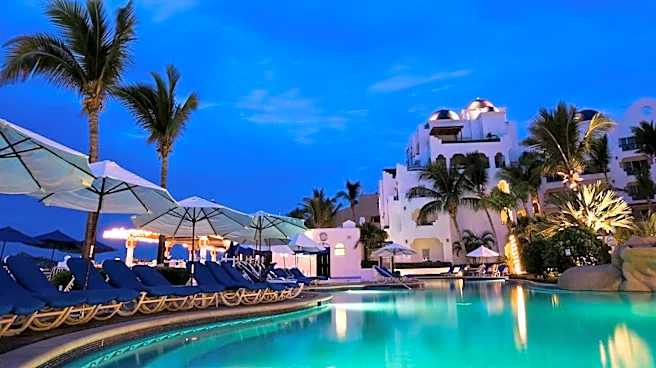
Grand Fiesta Americana Los Cabos, an all-inclusive luxury resort, is offering a unique program called 'Travelty Experiences' designed to immerse guests in local culture and sensory adventures. These experiences range from culinary explorations to wellness
and cultural activities. One notable offering is 'Dining in the Dark,' a five-course meal served in total darkness, paired with wine selections, which heightens other senses. Another experience, the 'Ancestral Spirits Trail,' educates guests on various Mexican spirits beyond tequila and mezcal, including bacanora, raicilla, and sotol, each presented with historical and cultural context. The resort also features a 'Harvest Ritual,' where guests participate in grape stomping at sunset, followed by a foot bath and massage, and a tasting of Mexican wines. These activities aim to provide a deeper, more personal connection to the destination, focusing on memorable feelings rather than just details.
Why It's Important?
The 'Travelty Experiences' at Grand Fiesta Americana Los Cabos represent a growing trend in the hospitality industry towards offering immersive and authentic cultural engagements rather than just standard luxury amenities. This approach caters to travelers seeking more profound and memorable experiences, moving beyond typical tourist activities. By focusing on sensory engagement, such as 'Dining in the Dark,' and cultural education, like the 'Ancestral Spirits Trail,' the resort enhances guest satisfaction and differentiates itself in a competitive market. This strategy can lead to increased guest loyalty and positive word-of-mouth, which are crucial for the tourism sector. For the U.S. travel market, this signifies an evolution in consumer demand, where experiential travel is becoming increasingly valued. It also highlights the economic impact of such programs, as they often involve local experts, chefs, and cultural practitioners, thereby supporting local economies and preserving cultural heritage. The emphasis on creating lasting 'feelings' rather than just 'details' reflects a shift in how luxury travel is perceived and marketed.
What's Next?
The success of 'Travelty Experiences' at Grand Fiesta Americana Los Cabos may encourage other resorts and hospitality groups, particularly those catering to the U.S. market, to develop similar immersive programs. This could lead to a broader trend of 'experiential tourism' becoming a standard offering in luxury travel. Resorts might invest more in local partnerships, cultural experts, and unique activity development to meet evolving traveler expectations. There could also be an increase in demand for personalized and curated travel itineraries that focus on deep dives into local traditions, cuisine, and wellness practices. Furthermore, the emphasis on sensory experiences could inspire innovations in other sectors of the travel industry, such as cruise lines or boutique hotels, to integrate similar concepts. The continued evolution of these offerings will likely be driven by guest feedback and the desire to create distinct, unforgettable travel narratives.
Beyond the Headlines
The concept of 'Travelty Experiences' touches upon the deeper psychological aspects of travel, moving beyond mere sightseeing to foster genuine connection and personal growth. By engaging multiple senses and providing cultural context, these programs can transform a vacation into a transformative journey. The 'Dining in the Dark' experience, for instance, challenges guests to rely on senses other than sight, potentially leading to a more profound appreciation of food and conversation. The 'Ancestral Spirits Trail' not only introduces new beverages but also educates guests about the rich history and craftsmanship behind them, fostering cultural understanding and respect. The 'Harvest Ritual' connects guests to ancient traditions, offering a hands-on experience that is both educational and emotionally resonant. This shift towards meaningful engagement reflects a broader societal desire for authenticity and purpose in leisure activities, suggesting that the future of luxury travel will increasingly prioritize experiences that enrich the mind, body, and spirit, rather than just providing opulent surroundings.