
What's Happening?
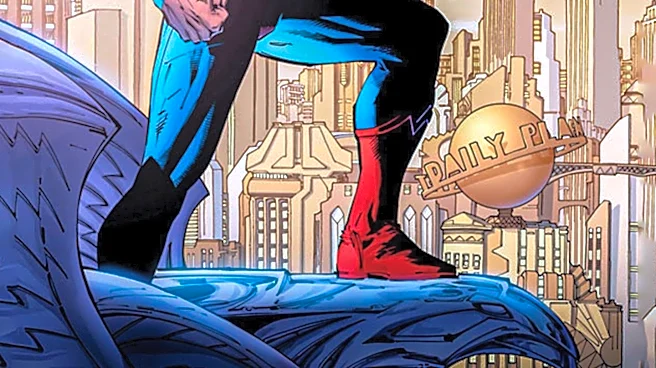
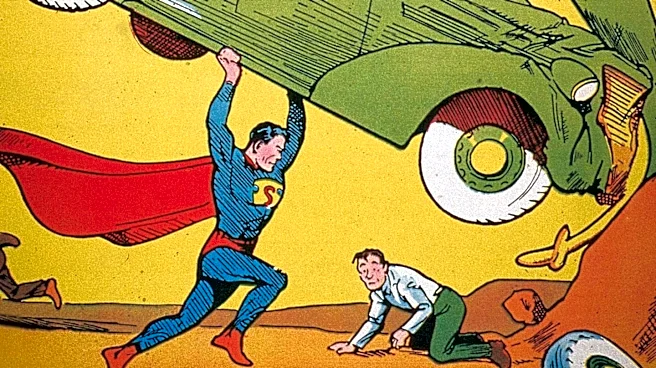
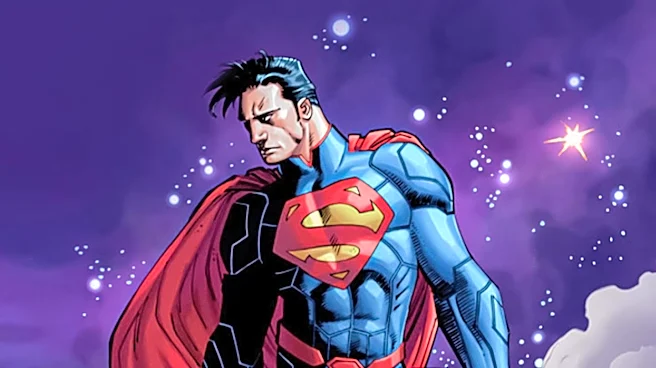
DC Comics has launched 'Superman: The Stranger #1,' a new comic that transports the iconic hero back to his 1938 origins, emphasizing his role as a champion against social injustice. Written and illustrated by Wes Craig, this Black Label Elseworld series
reimagines Clark Kent's early days as Superman, portraying him as a weaker, more confused hero who was raised in an orphanage and never knew the Kents. The narrative highlights his struggle to make a significant impact amidst widespread societal inequalities, with Clark recounting experiences of living on the streets and working in a sweatshop. This version of Superman is driven by a desire to expose evil and spread truth, aligning with his original Golden Age epitaph as a 'Champion of the Oppressed.' The comic also reintroduces Lex Luthor not as a mad scientist, but as a ruthless businessman plotting to 'protect the United States' through nefarious schemes, mirroring the social and economic anxieties of the era.
Why It's Important?
The release of 'Superman: The Stranger #1' is significant as it marks a deliberate return to Superman's foundational purpose, which was initially rooted in addressing social issues rather than solely battling supervillains. This shift reflects a growing demand among fans for more socially conscious narratives in superhero comics, offering a commentary on contemporary issues through a historical lens. By depicting Superman's early struggles against corruption and inequality, the comic provides a relevant parallel to current geopolitical and economic situations, making the character more relatable to modern audiences. The reimagining of Lex Luthor as a cutthroat capitalist further underscores this social critique, highlighting the enduring nature of power imbalances. This approach could influence future superhero storytelling, encouraging creators to explore deeper societal themes and re-evaluate the core motivations of established characters, potentially broadening the appeal of comics beyond traditional superhero action.
What's Next?
As 'Superman: The Stranger #1' is the first issue in a new Black Label Elseworld series, subsequent issues are expected to further develop Clark Kent's journey as he grapples with his powers and his mission to make a difference in a world plagued by injustice. The series will likely explore the escalating conflict between this socially conscious Superman and the ruthless businessman Lex Luthor, setting the stage for a climactic confrontation. Readers can anticipate a continued focus on the ethical dilemmas Superman faces, particularly his desire to do more than just stop low-level crime. The success of this series could pave the way for more Golden Age-inspired narratives within the DC Comics universe, potentially influencing other characters to revisit their original, often more grounded, motivations. Fans will be watching to see how this tender yet determined interpretation of Superman evolves and whether it will become a modern classic, as suggested by early reviews.
Beyond the Headlines
This return to Superman's Golden Age roots in 'Superman: The Stranger #1' carries deeper implications for the character's legacy and the superhero genre as a whole. By emphasizing his social justice origins, the comic challenges the perception of Superman as an all-powerful, godlike figure, instead presenting him as a more vulnerable and humanized hero driven by empathy for the oppressed. This portrayal encourages a re-evaluation of what constitutes heroism, suggesting that true strength lies not just in physical power, but in the commitment to fighting systemic injustices. The decision to set the story in 1938, a period of significant social and economic upheaval, allows for a nuanced exploration of themes like poverty, corruption, and the abuse of power, making the narrative resonate with contemporary societal concerns. This approach could inspire a broader trend in comics to delve into the ethical and philosophical dimensions of heroism, fostering a more reflective and socially engaged form of storytelling.