
What's Happening?
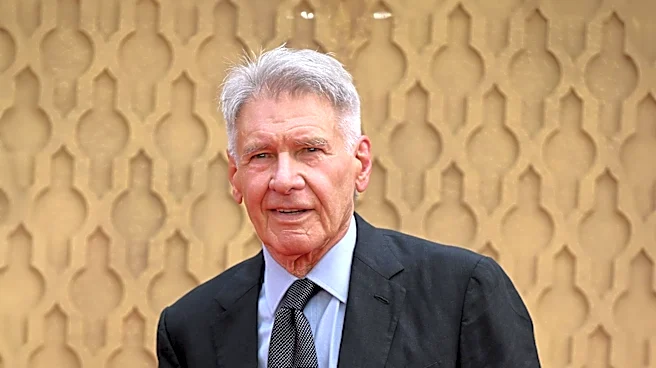
Harrison Ford has publicly stated his regret regarding his decision to turn down a role in the 2005 film 'Syriana'. The part he declined was ultimately played by George Clooney, who went on to win an Academy
Award and a Golden Globe for his performance. Ford admitted to The Irish Examiner that he initially 'didn’t feel strongly enough about the truth of the material' when he was offered the role. However, after seeing the final product, he realized that the film underwent significant changes from the script he reviewed, making him believe he 'made a mistake'. This sentiment highlights the challenges actors face in evaluating projects based on early scripts, as films can evolve considerably during production.
Why It's Important?
This revelation from a prominent actor like Harrison Ford underscores the speculative nature of the film industry and the difficult choices actors must make in their careers. For actors, selecting roles involves not only assessing the script but also anticipating the final vision of the director and the potential impact of subsequent revisions. Ford's regret illustrates how a misjudgment of a project's potential can lead to missing out on critically acclaimed performances and significant career milestones. It also highlights the dynamic process of filmmaking, where initial material can be transformed into something entirely different, affecting the perceptions and decisions of those involved. The success of 'Syriana' and Clooney's award-winning performance serve as a tangible example of a 'road not taken' for Ford, demonstrating the high stakes involved in career choices within Hollywood.
What's Next?
While Ford's regret is a personal reflection on a past decision, it serves as a reminder of the unpredictable nature of film production and the subjective interpretation of scripts. For other actors and industry professionals, this anecdote might reinforce the importance of thoroughly vetting projects and understanding the potential for creative evolution. It could also lead to more cautious approaches in declining roles, especially for projects with strong underlying themes or promising creative teams. Although there are no direct 'next steps' for Ford regarding this specific film, his comments contribute to the ongoing discourse about career choices and the artistic process in the entertainment industry.
Beyond the Headlines
Beyond the immediate regret, Ford's comments touch upon the broader theme of artistic foresight and the evolution of creative works. His initial reservations about the 'truth of the material' suggest a deeper engagement with the thematic integrity of a project, rather than just its commercial appeal. The fact that the film changed significantly from his initial review implies that creative visions can coalesce and strengthen over time, sometimes beyond what is apparent in early drafts. This situation also subtly highlights the competitive landscape of Hollywood, where one actor's missed opportunity can become another's career-defining role. It prompts reflection on how much an actor's personal connection to a story influences their performance and the ultimate success of a film.