








What's Happening?
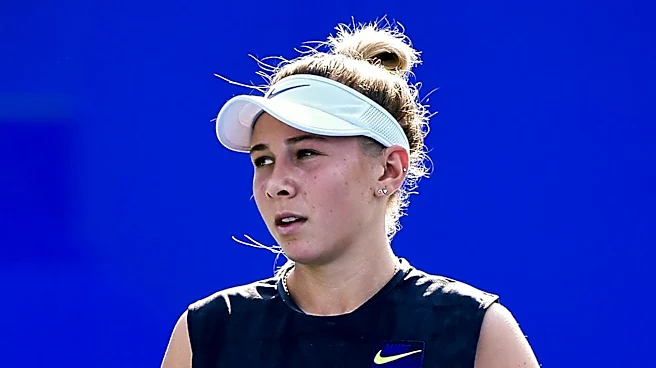
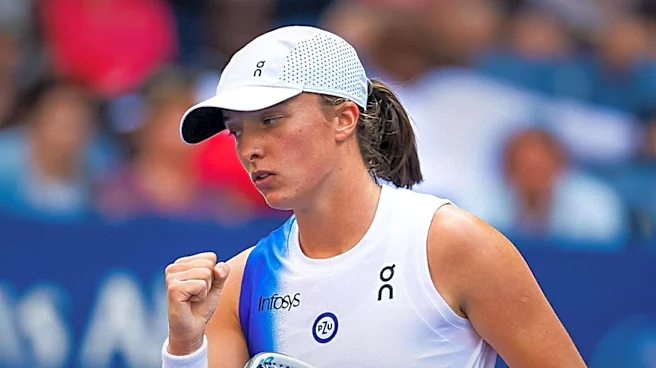
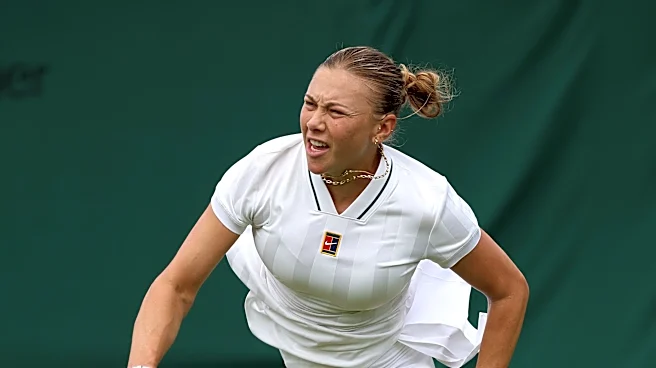
Amanda Anisimova, a professional tennis player, is preparing for Wimbledon 2026 with a renewed perspective on her career and personal life. After a challenging defeat in the previous year's final against Iga Swiatek, Anisimova has focused on personal growth
and mental health. In 2023, she took a break from tennis to address feelings of anxiety and depression, which she attributes to professional and personal setbacks. This decision allowed her to reset and return to the sport with a new mindset. Anisimova has since embraced a slower, more deliberate approach to training, emphasizing the importance of trusting the process and maintaining balance in her life. Her preparation for Wimbledon includes working with a new coach, Sebastian Sachs, and focusing on both physical and mental well-being.
Why It's Important?
Anisimova's journey highlights the growing recognition of mental health in professional sports. Her decision to prioritize mental well-being over immediate career success reflects a broader shift in how athletes approach their careers. This change can influence other athletes to consider their mental health as a critical component of their professional lives. Anisimova's story also underscores the importance of resilience and adaptability in sports, as she demonstrates that setbacks can lead to personal growth and renewed motivation. Her approach may inspire other athletes to seek balance and fulfillment beyond their professional achievements, potentially leading to healthier and more sustainable careers.
What's Next?
As Anisimova prepares for Wimbledon 2026, her focus will be on maintaining her new perspective and enjoying the competition. She aims to compete with confidence and trust in her abilities, regardless of the outcome. Her journey may continue to influence discussions around mental health in sports, encouraging more athletes to prioritize their well-being. The tennis community and fans will be watching to see how Anisimova's renewed approach impacts her performance and whether it leads to success on the court. Her story may also prompt further dialogue about the support systems available to athletes dealing with mental health challenges.