







What's Happening?
King's College London has been awarded £10.8 million by the Engineering and Physical Sciences Research Council (EPSRC) to advance AI, wearable technology, and imaging for the detection, monitoring, and prevention of cardiovascular disease. This funding
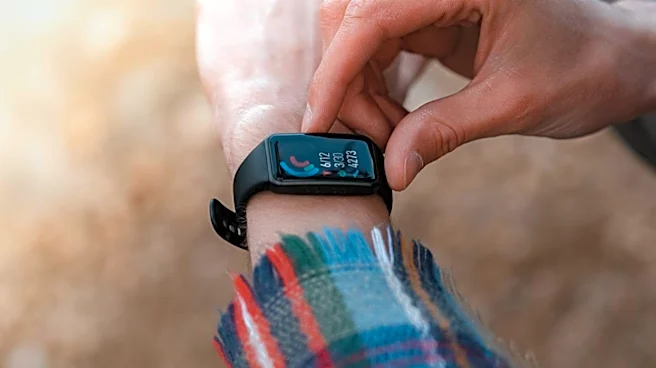
establishes the EPSRC HeartTech Hub, which will explore how data from wearable devices, medical imaging, health records, and community measurements can be integrated to identify at-risk individuals and facilitate earlier interventions. An additional £10 million in cash and in-kind support is being contributed by partner organizations. The research aims to develop an AI-powered wellbeing coach that will offer personalized guidance on lifestyle choices and prompt users when medical advice is necessary. Professor Sebastien Ourselin, Head of the School of Biomedical Engineering & Imaging Sciences at King's, will lead the hub, emphasizing the shift towards preventive care through technologies usable in community settings rather than solely in hospitals. The initiative is one of five new national hubs focused on developing technologies to promote longer, healthier lives.
Why It's Important?
This research is significant as it addresses the long-standing challenge of shifting healthcare from reactive treatment to proactive prevention, particularly for cardiovascular diseases. By developing technologies that can be deployed in community settings, the initiative aims to make diagnosis quicker and more accessible, reducing reliance on specialist centers and expensive hospital equipment. The integration of AI with wearable devices and health data could revolutionize how individuals manage their heart health, empowering them with personalized insights and timely prompts for medical intervention. This approach has the potential to improve public health outcomes by identifying risks earlier and supporting sustained lifestyle changes. The collaboration between university research, NHS trusts, and industry partners also creates a robust framework for translating scientific advancements into practical healthcare solutions, potentially alleviating pressure on existing healthcare systems and fostering a more preventative health culture.
What's Next?
The EPSRC HeartTech Hub will proceed with its research, focusing on assessing cardiovascular risk and supporting individuals before disease progression. This will involve developing new imaging and computer modeling techniques to enhance diagnostic capabilities. The AI-powered wellbeing coach is a key development, designed to provide personalized lifestyle guidance and identify when medical assessment is needed. The project will also create tools informed by health data and personalized risk models to help people manage their heart health at home. The research will involve patients and the public throughout the process to ensure the technologies are inclusive and user-centered. The long-term goal is to integrate these innovations into broader healthcare systems, supporting the NHS and UK Government’s 10-Year Health Plan by enabling health management outside traditional hospital settings.
Beyond the Headlines
The development of AI-powered wellbeing coaches and integrated health monitoring systems raises important ethical and privacy considerations. The collection and analysis of extensive personal health data from wearable devices, medical imaging, and health records necessitate robust data security protocols and transparent consent mechanisms. Ensuring equitable access to these advanced technologies across diverse socioeconomic groups will also be crucial to prevent exacerbating existing health disparities. Furthermore, the role of AI in providing medical guidance requires careful calibration to ensure it complements, rather than replaces, professional medical advice, maintaining a balance between automated support and human oversight. The success of such initiatives could pave the way for a broader transformation in healthcare delivery, emphasizing personalized, preventive care models that empower individuals to take a more active role in managing their health.