







What's Happening?
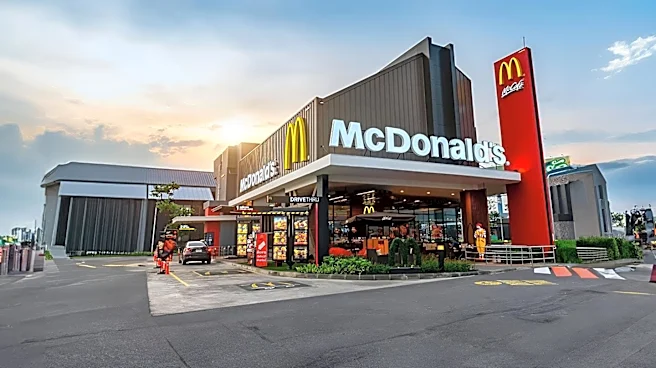
McDonald's and its U.S. franchisees are facing a proposed class-action lawsuit alleging algorithmic price-fixing through an AI-enhanced pricing tool. The lawsuit, filed by consumer Michael Thomas in federal court in Illinois, claims that the tool, available
to franchisees for over a decade, acts as an "information-sharing pricing platform" that coordinates prices across McDonald's 14,000 U.S. restaurants. Thomas noticed price discrepancies between locations and argues that McDonald's exerts significant leverage over franchisees to follow these pricing recommendations, despite the company's claims that the tool is optional. McDonald's has denied the allegations, stating that franchisees set their own menu prices and that the tools provided are merely optional decision-support, not a means to automate or fix pricing. The complaint suggests that the absence of exclusive territories in McDonald's franchise model makes franchisees independent competitors, rendering coordinated pricing anticompetitive under federal antitrust law.
Why It's Important?
This lawsuit carries significant implications for the entire U.S. franchise industry, particularly for quick-service restaurants (QSRs) and retail franchises that utilize system-wide pricing tools. If courts accept the plaintiff's argument that a pricing recommendation, when integrated into a performance scoring system, crosses the line from suggestion to coordination, it could redefine antitrust law in the franchise context. The outcome will determine whether shared data inputs and coordinated outputs from AI-powered tools can be considered price-fixing, even without explicit collusion. This could force franchisors to re-evaluate how they structure and present technology tools, including those for pricing, inventory, and labor optimization, to their franchisees. The case highlights the tension between a franchisor's desire for system-wide consistency and a franchisee's independence as a business owner, potentially impacting the operational models and legal liabilities of numerous franchise systems across the country.
What's Next?
The case is currently in its early stages, with McDonald's yet to file a formal response in court. If the lawsuit proceeds, discovery could reveal internal documentation regarding the AI pricing tool's functionality, the nature of compliance expectations communicated to franchisees, and how pricing recommendations were presented in operational communications. Franchise attorneys across the QSR sector are expected to closely monitor the proceedings. The court's decision on whether to certify the class and its interpretation of algorithmic pricing in a franchise context will be crucial. The outcome could lead to significant changes in how franchisors develop and implement technology solutions that influence pricing, potentially requiring greater transparency and clearer distinctions between recommendations and mandates to avoid future antitrust challenges. The legal precedent set by this case could reshape the relationship between franchisors and franchisees nationwide.
Beyond the Headlines
The lawsuit delves into the complex ethical and legal dimensions of artificial intelligence in business operations, particularly concerning its potential to facilitate anti-competitive practices. The core issue revolves around whether AI-driven recommendations, even if presented as optional, can effectively coerce independent businesses into price coordination, thereby undermining market competition. This case could contribute to the evolving legal framework surrounding algorithmic accountability and the regulation of AI in commercial settings. It also raises questions about data privacy and the extent to which franchisors collect and utilize franchisee and customer data to inform pricing strategies. The outcome may influence how consumers perceive fairness in pricing and the role of technology in shaping market dynamics, potentially leading to increased scrutiny of AI tools used by large corporations and a demand for greater transparency in their implementation.