




What's Happening?
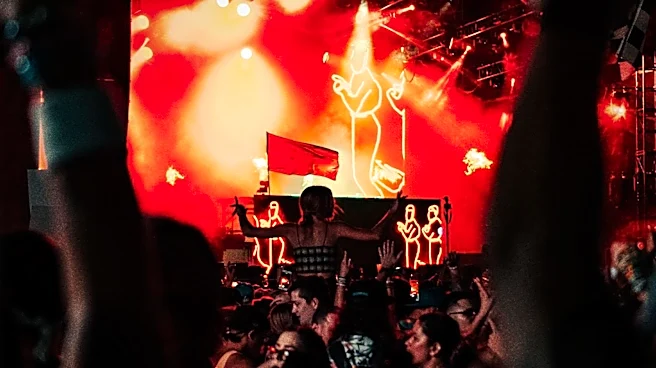
The Coachella Valley Music and Arts Festival, held annually in Indio, California, has evolved beyond a music event into a significant cultural and commercial platform for the fashion industry. What began in 1999 as a music festival has transformed, particularly
since the 2010s, into a media phenomenon characterized by extravagant outfits, influencers, and sponsored spaces. This shift is largely attributed to the rise of the internet and visual social media platforms, which turned the festival into a highly photographed event. Brands now view Coachella as a 'medium' rather than just an event to sponsor, engaging in 'fashiontainment' by creating immersive experiences like Gap's 'Hoodie House' in 2026, which offered limited-edition customizable hoodies and social spaces. This approach allows brands to build cultural relevance and emotional connections with attendees, extending their reach beyond traditional advertising.
Why It's Important?
This evolution of Coachella into a fashion-centric platform holds significant importance for U.S. industries, particularly in retail, marketing, and entertainment. It demonstrates a new model for brand engagement, where companies move beyond simple sponsorship to create integrated experiences that resonate deeply with consumers. This 'fashiontainment' trend influences how brands allocate marketing budgets, shifting focus from traditional advertising to experiential marketing and content creation. For the fashion industry, it provides a dynamic trend laboratory, where styles emerge and are rapidly disseminated globally through social media. This phenomenon also impacts local economies in the Coachella Valley, as the festival generates value beyond ticket sales through lodging, dining, tourism, and retail, creating a temporary but significant economic boom for the region.
What's Next?
The trend of festivals serving as integrated platforms for fashion and brand experiences is likely to continue and expand. Brands will increasingly seek innovative ways to create immersive and personalized interactions with consumers, moving beyond mere product display. This could lead to more sophisticated 'institutions within the festival' that offer unique products, services, and social spaces. The challenge for brands will be to maintain authenticity and avoid the risk of experiences becoming repetitive or overly commercialized. Future developments may also see a greater emphasis on content creation and community building, with less focus on purely visual photo opportunities and more on memorable, engaging experiences that foster deeper connections between brands and their audiences. The festival's economic impact on the Coachella Valley is also expected to grow, with more off-site brand activations and events capitalizing on the festival's draw.
Beyond the Headlines
The transformation of Coachella reflects broader cultural shifts in how identity is expressed and consumed in the digital age. Clothing at festivals has become a powerful tool for individual expression and collective belonging, allowing attendees to temporarily adopt different identities. This phenomenon highlights the blurring lines between entertainment, fashion, and personal branding, particularly with the pervasive influence of social media influencers. The festival's impact extends to ethical considerations regarding sustainability and waste management, as the creation and dismantling of a 'temporary city' raise questions about environmental footprint. The long-term cultural legacy of such events also includes how temporary art installations find permanent homes, like the 'Roadrunner' sculpture from Coachella 2014, which became a public art piece in La Quinta, demonstrating how festival culture can contribute to public spaces and local identity.