



What's Happening?
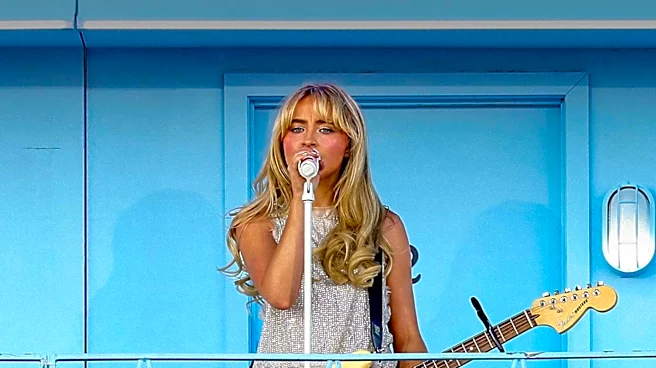
A fictional narrative describes an imagined meeting between John Lennon and Sabrina Carpenter at Café La Fortuna in New York City. In this scenario, Lennon, a resident of New York in his final years, invites Carpenter to join him for an espresso. Their
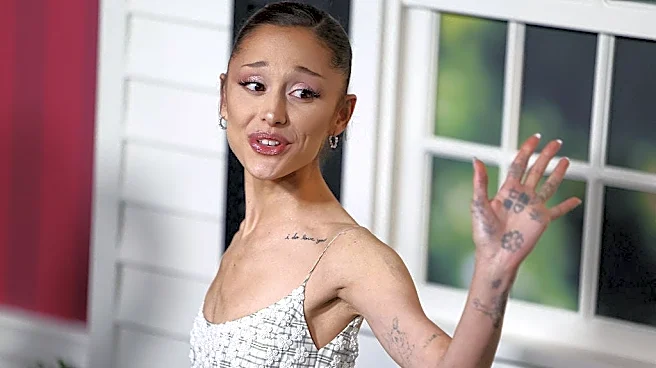
conversation touches upon various musical and pop culture references. Lennon mentions watching an SNL skit featuring Ariana Grande's 'Espresso Martinis' and expresses his amusement. Carpenter seeks Lennon's help with songwriting, feeling disoriented by Eric Clapton's 'Cocaine.' Lennon, in turn, shares his musical preferences, noting his appreciation for The Who, Cher, and Olivia Newton-John. The setting is an unpretentious Italian cafe, a known haunt of Lennon's near his Dakota apartment.
Why It's Important?
This fictional piece, while not reporting on a real event, highlights the enduring cultural impact of musical figures across different generations. The imagined interaction between John Lennon, a legendary artist, and Sabrina Carpenter, a contemporary musician, underscores the continuous evolution and cross-generational appeal of music. It also serves as a creative exploration of how artists from different eras might connect over shared experiences in the music industry and pop culture. The narrative implicitly suggests the timeless nature of artistic inspiration and the potential for dialogue between diverse musical perspectives, even if only in a hypothetical context. It also reflects on the personal lives and habits of public figures, such as Lennon's preference for local cafes.
What's Next?
As this is a fictional narrative, there are no direct 'next steps' in a real-world sense. However, such creative pieces often inspire further artistic interpretations, discussions among fans, or even influence future works by artists. The article itself is presented within the context of a music challenge, suggesting that it aims to encourage engagement with music and songwriting themes among its readers. Future prompts for this challenge include exploring songs with the same name, songs by artists born in December, and cover songs, indicating a continued focus on musical exploration and community participation.
Beyond the Headlines
The deeper implication of this fictional encounter lies in its ability to bridge different eras of music and celebrity. It invites readers to consider the hypothetical intersections of cultural icons and how their legacies might interact with contemporary trends. The discussion of songwriting challenges and musical preferences, even in a fictional context, reflects the universal struggles and inspirations faced by artists. It also subtly touches upon the idea of artistic influence and the continuous cycle of inspiration within the music world, where past legends can still 'inspire' current artists, even if only through imaginative scenarios. The piece also serves as a commentary on the nature of celebrity and the public's fascination with the personal lives and interactions of famous individuals.