




What's Happening?
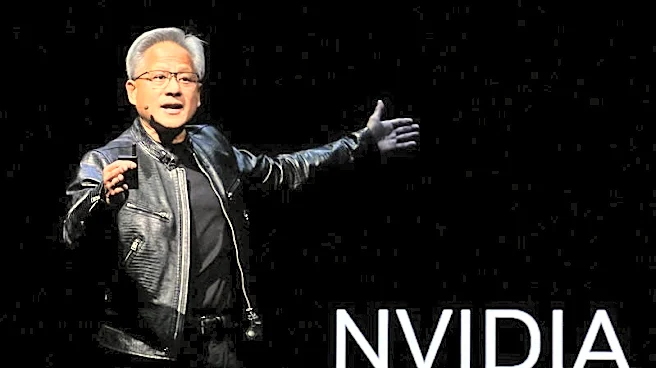
U.S. Trade Representative Jamieson Greer has publicly stated that Nvidia is a 'structurally important company' and that the U.S. government needs to ensure its continued leadership in the semiconductor industry. This declaration comes as Washington intensifies
its export controls on advanced AI chips, particularly those destined for China. The administration's strategy aims to retain critical technology within allied nations and restrict its flow to rival countries. Chips like Nvidia’s H200 are subject to stricter controls, including stringent licensing requirements and security reviews, as part of national security measures to prevent advanced hardware from reaching China. Additionally, the Trump administration has imposed a 25% tariff on certain advanced AI chips. These policies have significantly impacted Nvidia's revenue from China and Hong Kong, which decreased from 20.2% in fiscal year 2024 to 7% in the first half of fiscal year 2027, representing a substantial reduction in a key market.
Why It's Important?
Greer's statement signals that the U.S. government views Nvidia's success as directly aligned with national interests, particularly in maintaining American leadership in AI hardware. This policy stance has dual implications for Nvidia and the broader semiconductor industry. While government backing can be seen as a strategic advantage, the accompanying national security measures, such as export controls, licensing reviews, and tariffs, directly limit Nvidia's market access and sales channels for its most advanced products. The significant decline in Nvidia's revenue from China illustrates the tangible economic impact of these trade policies. Investors in the semiconductor and AI sectors may experience increased volatility as trade policies continue to evolve, potentially leading to higher costs and restricted market access, which could negatively affect stock sentiment. The ongoing U.S.-China trade talks, especially concerning rare earth minerals and the planned meeting between President Trump and Xi Jinping, will also play a crucial role in shaping the future landscape for these industries.
What's Next?
The future trajectory for Nvidia and the semiconductor industry will largely depend on upcoming policy adjustments and international negotiations. Any modifications to export controls on high-end AI chips, such as the H200, will directly influence Nvidia's shipping capabilities and market reach. Similarly, changes to the 25% tariff on certain AI chips could alter production costs and pricing strategies for manufacturers. The outcome of discussions between the U.S. and China, particularly regarding rare earth minerals and broader trade relations, will be critical. These talks could either alleviate or intensify existing trade tensions, impacting supply chains and market access for technology companies. Stakeholders will closely monitor these developments for indications of future trade policy direction and its potential effects on global technology markets.
Beyond the Headlines
The U.S. government's explicit designation of Nvidia as a 'structurally important company' underscores a broader strategic shift towards industrial policy, where national security interests are deeply intertwined with the success of key domestic technology firms. This approach moves beyond traditional market competition, suggesting that the government is willing to actively intervene to protect and promote companies deemed vital for national technological superiority. This could set a precedent for other critical sectors, potentially leading to increased government involvement in guiding market outcomes. The ethical implications of such policies include questions about fair competition, market distortion, and the potential for retaliatory measures from other nations. Long-term, this could foster a more fragmented global technology landscape, with distinct technological ecosystems emerging based on geopolitical alliances and national security priorities, rather than purely economic efficiencies.