





What's Happening?
Manufacturing leaders, educators, and government officials in Vermont convened for a roundtable discussion to address the state's workforce challenges, particularly within the manufacturing sector. The event, organized by the Brattleboro Development Credit
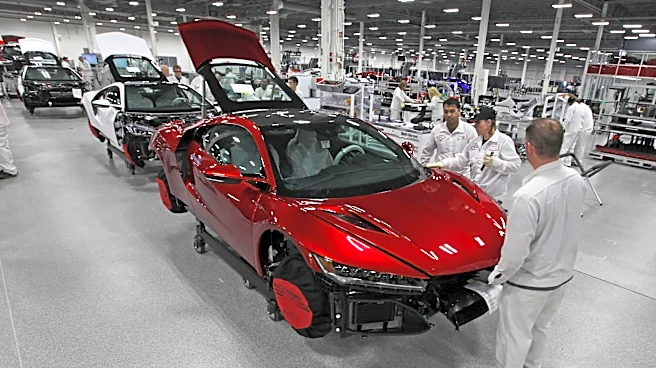
Corporation (BDCC) during Manufacturing Month, highlighted the critical need to retain young talent and attract new employees to the state. Mathew Barewicz, the state's Economic & Labor Market Information Director, presented data indicating that Vermont's manufacturing industry, proportional to its size, surpasses the national average. However, the state faces hurdles due to limited population growth, with 75% of its recent growth attributed to immigration. Discussions focused on changing perceptions of manufacturing, which is often seen as dangerous or offering limited upward mobility, despite significant advancements in cleanliness and opportunities within the industry. The goal is to streamline the process of educating and employing individuals in regional manufacturing.
Why It's Important?
The discussions underscore a significant economic challenge for Vermont: maintaining and growing its manufacturing sector amidst a tight labor market and limited population growth. A thriving manufacturing industry is crucial for the state's economic stability and job creation. The reliance on immigration for population growth highlights the potential impact of federal policy changes on Vermont's workforce. Furthermore, the effort to rebrand manufacturing as an attractive career path for young people is vital for ensuring a future talent pipeline. If successful, these initiatives could lead to a more robust and sustainable manufacturing base, fostering economic resilience. Conversely, failure to address these workforce issues could result in a decline in manufacturing output, job losses, and a broader negative impact on the state's economy.
What's Next?
The roundtable discussions are intended to initiate ongoing conversations and collaborative efforts among employers, educators, and government officials. The immediate next steps involve brainstorming shared solutions to streamline the education and employment process within the regional manufacturing industry. Commissioner of Economic Development Lyle Jepson emphasized the importance of building relationships with young people to encourage them to stay in Vermont for their careers. Future actions may include developing new educational programs, vocational training initiatives, and outreach campaigns to promote manufacturing careers. The focus will be on making these professions more accessible and appealing to a younger demographic, potentially involving changes in how educational institutions and businesses collaborate to meet workforce demands.
Beyond the Headlines
Beyond the immediate economic implications, this initiative touches upon broader societal and cultural shifts. The effort to change perceptions of manufacturing reflects a need to adapt to modern workforce expectations and technological advancements. It also highlights the ethical dimension of ensuring equitable access to career opportunities and fostering a sense of community that encourages individuals to remain in the state. The reliance on immigration for population growth raises questions about long-term demographic trends and the integration of diverse communities into Vermont's workforce. Ultimately, the success of these efforts could serve as a model for other states facing similar demographic and economic challenges, emphasizing the importance of local collaboration and proactive workforce development strategies.