




What's Happening?
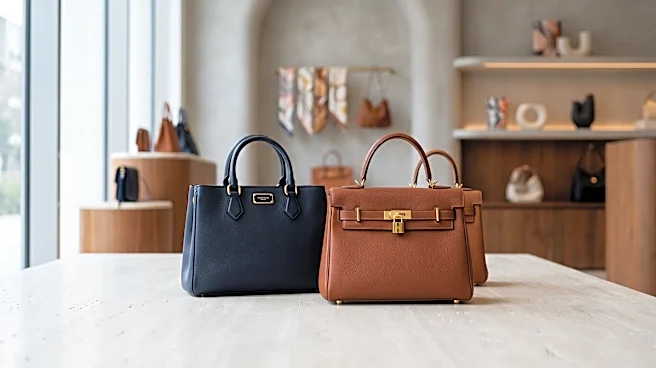
A new Hermès Birkin 25 handbag is available, crafted from Dune swift leather and featuring permabrass hardware. This particular model includes tonal stitching, two straps with a front toggle closure, and a clochette with a lock and two keys. The item
is described as new and never worn, indicating its pristine condition. The vendor emphasizes that such new items are considered 'Final Sale' due to their investment-grade status and the importance of maintaining their untouched state to preserve market value. Customers are advised to inspect the item within 48 hours of delivery, as the vendor is not responsible for issues beyond authenticity after this period. This policy underscores the luxury market's focus on condition and provenance for high-value assets.
Why It's Important?
The sale of ultra-luxury items like the Hermès Birkin 25 highlights the dynamics of the high-end fashion market, where condition significantly impacts value. The 'Final Sale' policy for new items reflects the brand's commitment to maintaining the integrity and exclusivity of its products. This approach protects the investment value for both the seller and the buyer, as even minimal handling can affect a luxury item's market perception and resale value. For consumers, understanding these stringent return policies is crucial when investing in such high-value goods. The use of specific materials like Dune swift leather and permabrass hardware also signifies the meticulous craftsmanship and material selection that contribute to the brand's prestige and desirability in the luxury sector.
What's Next?
For potential buyers, the next step involves careful consideration of the 'Final Sale' policy before purchase, as returns are not accepted for new, never-worn items. Those interested in pre-owned items or shoes have more flexibility, as these can be exchanged for other pieces of equal or greater value, or for store credit. This distinction in return policies suggests a tiered approach to managing inventory and customer expectations based on the item's condition. The continued availability of such exclusive items reinforces Hermès's position in the luxury market, with ongoing demand for its iconic products. The brand will likely continue to release new variations and limited editions, maintaining its allure and investment potential.
Beyond the Headlines
The stringent return policy for new Hermès items reflects a broader trend in the ultra-luxury market where products are treated as investment assets rather than mere consumer goods. This approach fosters a perception of scarcity and exclusivity, which in turn drives demand and maintains high resale values. The emphasis on 'investment-grade condition' suggests that these items are not just fashion accessories but tangible assets that can appreciate over time. This also raises questions about consumer rights in the luxury sector, where the pursuit of exclusivity often overrides standard retail return practices. The meticulous sourcing and maintenance of these items also highlight the extensive supply chain and quality control measures employed by luxury brands to uphold their reputation.