







What's Happening?
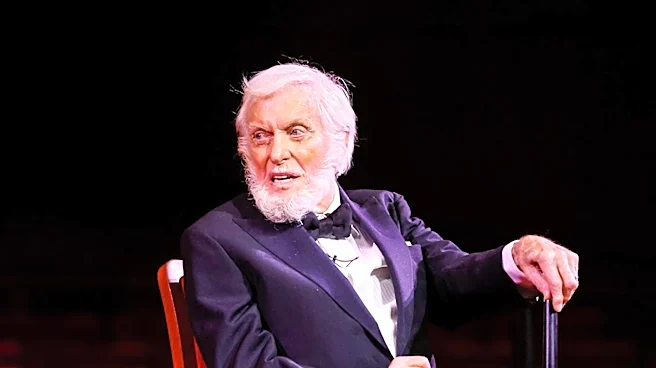
Alan Mandell, a highly regarded classical actor and a prominent interpreter of playwright Samuel Beckett's works, passed away on Tuesday at his home in Westwood at the age of 98. Mandell's family representatives confirmed his death to The Times. His extensive
career in theater began in the early 1950s as the artistic director of Theater '49 in Toronto. In 1954, during a visit to his sister, he started working with the San Francisco Actor's Workshop. His collaboration with co-founders Jules Irving and Herbert Blau was instrumental in transforming this workshop into one of the first regional theater companies in the U.S. Mandell's portrayal of Lucky in a San Quentin Prison production of Beckett's 'Waiting for Godot' inspired inmates and led to the establishment of the San Quentin Drama Workshop, the first extended prison theater program in the U.S. launched by prisoners, operating from 1958 to 1965. He later moved to California to join the Los Angeles Actors' Theatre, which became the Los Angeles Theatre Center, where he served as a consulting director and actor.
Why It's Important?
Alan Mandell's passing marks the end of an era for American theater, particularly for those dedicated to classical works and the avant-garde. His significant contributions to the San Francisco Actor's Workshop helped establish the regional theater movement in the U.S., decentralizing theatrical production from New York and fostering local artistic communities. The San Quentin Drama Workshop, which he helped inspire, demonstrated the transformative power of theater in correctional facilities, offering creative and emotional outlets for inmates and proving the therapeutic value of collaborative artistic endeavors. Mandell's deep understanding and interpretation of Samuel Beckett's complex plays enriched the American theatrical landscape, bringing challenging and profound works to wider audiences. His commitment to the stage, even late in life, underscored the enduring value of live performance and the dedication required to master classical roles, leaving a lasting legacy for actors and directors in the U.S. theater community.
What's Next?
While Alan Mandell's direct contributions to theater have concluded with his passing, his legacy is expected to continue influencing future generations of actors and theater practitioners. The San Quentin Drama Workshop, which he helped inspire, has set a precedent for arts programs in correctional facilities, and its model may continue to be studied and replicated. His interpretations of Samuel Beckett's works will likely remain a benchmark for actors tackling these challenging roles. Theater companies and academic institutions may honor his memory through retrospectives of his work or by emphasizing the classical and experimental theater traditions he championed. His film and television appearances, though not his primary focus, will also ensure his presence in broader cultural memory. The impact of his dedication to the craft and his role in shaping regional theater will likely be discussed and celebrated in theatrical circles for years to come.
Beyond the Headlines
Alan Mandell's career highlights a deeper narrative about the dedication to artistic craft over commercial success. Despite appearing in films and television, his primary ambition remained the stage, a medium he felt most alive in. This commitment challenges the conventional pursuit of fame, emphasizing the intrinsic value of performance and artistic expression. His work in San Quentin Prison with 'Waiting for Godot' underscores the profound human need for art and self-expression, even in the most restrictive environments. It speaks to the ethical dimension of art as a tool for rehabilitation and personal growth, demonstrating its capacity to foster collaboration and responsibility. Mandell's ability to perform challenging roles well into his late 80s and 90s also offers a powerful commentary on aging and creativity, proving that artistic vitality can endure and even deepen with age, defying societal expectations about retirement and productivity.