

What's Happening?
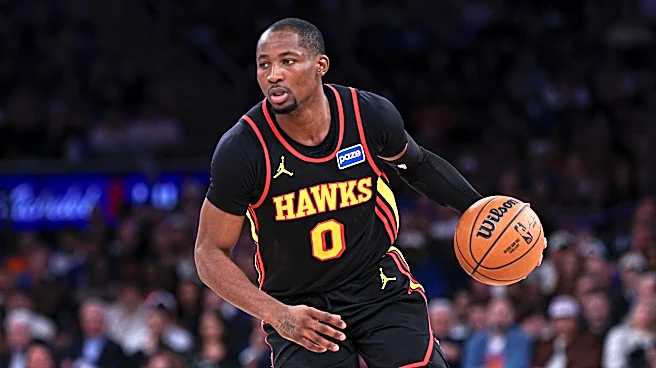
The Atlanta Hawks have declined their $24.3 million team option for Jonathan Kuminga, making the 23-year-old forward a free agent. Kuminga, who will turn 24 before the next NBA season, was traded to the Hawks from the Golden State Warriors in February.
During his brief tenure with Atlanta, he played in 16 regular-season games, averaging 12.3 points and 5.3 rebounds in 22.1 minutes. This decision comes after Kuminga's agent, Matt Turner, made public comments suggesting Kuminga was the Hawks' best player in terms of 'winning impact' and 'on/off net rating' during his time with the team. However, NBA insider Brett Siegel challenged these claims, noting that Kuminga ranked 6th in plus-minus, 5th in total net rating, and 9th in the playoffs among his Hawks teammates. Turner's comments have drawn scrutiny, especially as Kuminga recently agreed to a deal with the Minnesota Timberwolves.
Why It's Important?
The Hawks' decision to decline Kuminga's team option has significant implications for both the player and the team's roster strategy. For Kuminga, it means entering free agency, allowing him to seek a new contract and a fresh start, potentially with the Minnesota Timberwolves as reported. This move also highlights the ongoing scrutiny surrounding player agents' public statements and their potential impact on a player's market value and team relations. The discrepancy between the agent's claims and the statistical analysis by an NBA insider underscores the importance of data-driven evaluations in professional sports. For the Hawks, declining the option frees up substantial cap space, providing flexibility for future player acquisitions and roster adjustments as they aim to improve their team performance. This financial maneuver could enable them to pursue other targets in the free agency market or through trades, shaping their competitive outlook for the upcoming seasons.
What's Next?
Jonathan Kuminga is now a free agent and is expected to finalize his reported deal with the Minnesota Timberwolves. This move will see him join a new team and adapt to a new system, potentially seeking a more defined role and consistent playing time. For the Atlanta Hawks, the immediate next step involves utilizing the newly available cap space. They will likely explore various options in the free agency market or trade scenarios to acquire players who better fit their strategic vision and address specific team needs. The team's management will be under pressure to make impactful decisions to enhance their roster and improve their competitive standing in the league. The situation also puts a spotlight on the role of player agents and the potential consequences of their public commentary on player careers and team dynamics, which may lead to more cautious communication strategies in the future.
Beyond the Headlines
This situation extends beyond a simple contract decision, touching upon the evolving landscape of player-team relationships and the influence of external voices in professional sports. The public disagreement between Kuminga's agent and an NBA insider regarding his performance metrics highlights a broader trend where data analytics increasingly challenge subjective assessments in sports. This can lead to more transparent and objective evaluations of player value, but also create tension when agents attempt to inflate their clients' worth. Furthermore, the Hawks' decision reflects a strategic shift towards financial flexibility and a willingness to part ways with players who may not align with their long-term vision, even if it means foregoing a potentially valuable asset. This approach could influence how other NBA teams manage their rosters and evaluate player options, prioritizing strategic fit and financial prudence over retaining all talent, especially in a league with complex salary cap rules.