







What's Happening?
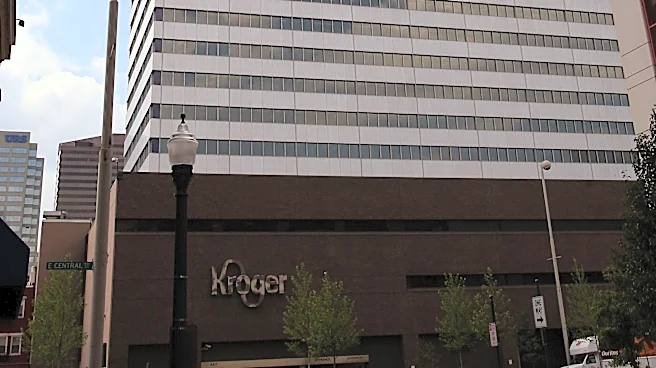
A Kroger store is mentioned in an article discussing the lifestyle and community around The Village Dallas, a mixed-use apartment and lifestyle community. The author recalls their father's visit during their freshman year at TCU, noting the easy transition
between the university campus and the city of Fort Worth. This observation included a row of restaurants and coffee shops along University Drive, with a TCU bookstore at an intersection that also housed a gas station, bank, and a Kroger. The mention of Kroger serves to illustrate the convenience and self-contained nature of the area around TCU, drawing a parallel to The Village Dallas as a similar 'bubble' where residents have easy access to necessities like food, exercise, and entertainment without needing to venture far.
Why It's Important?
The casual mention of a Kroger store in this context highlights the ubiquitous presence of major grocery chains in American suburban and urban landscapes, serving as essential community hubs. For residents of areas like the one described near TCU and The Village Dallas, the proximity of a Kroger signifies convenience and accessibility to daily necessities, which is a significant factor in lifestyle and community planning. This underscores the role of grocery stores not just as retail outlets, but as integral components of local infrastructure that contribute to the overall quality of life and self-sufficiency of a neighborhood. For Kroger, such mentions, even incidental, reinforce its brand as a reliable and accessible part of everyday American life, influencing residential choices and community development.
What's Next?
While the article does not directly discuss future plans for Kroger, its role as a foundational element in community convenience suggests a continued presence in similar mixed-use developments and residential areas. The trend of creating self-contained 'bubbles' where residents have easy access to amenities, including grocery stores, is likely to persist in urban planning. This implies that grocery chains like Kroger will continue to be key considerations for developers and residents alike when evaluating new communities or revitalizing existing ones. The emphasis on convenience and accessibility will likely drive further integration of essential services, including grocery retail, into residential and lifestyle complexes.
Beyond the Headlines
The integration of grocery stores like Kroger into the fabric of residential communities reflects a broader societal shift towards convenience and localized living. This trend can have significant implications for urban design, promoting walkable neighborhoods and reducing reliance on vehicular transport for daily errands. Culturally, the presence of a familiar grocery store can contribute to a sense of stability and normalcy within a community. Economically, these stores act as anchors for local commerce, attracting other businesses and contributing to property values. The article subtly points to how these seemingly mundane establishments are, in fact, critical components of modern American lifestyle, shaping how people live, work, and interact within their immediate environments.