




What's Happening?
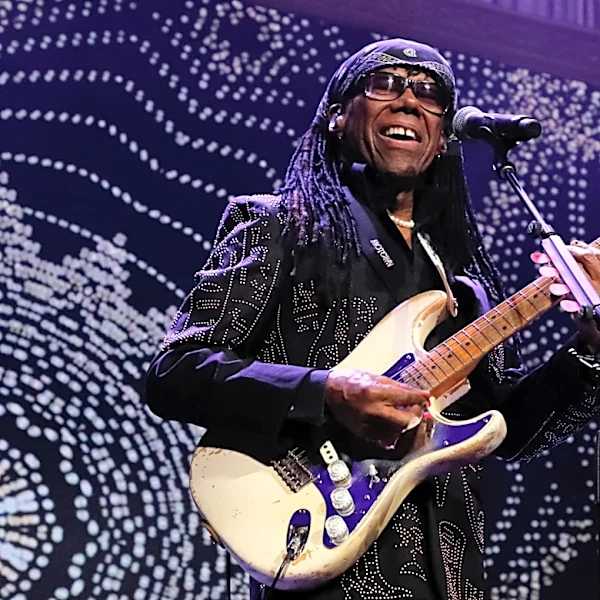
Nile Rodgers, the Songwriting and Rock and Roll Hall of Famer, is defending his decision to use artificial intelligence in the music video for a new version of 'The Christmas Song,' his 2020 charity collaboration with soul singer Rebecca Ferguson. Rodgers initially
shared footage of himself in a photogrammetry rig, expressing excitement for the 'next level' art project, which he stated was inspired by seeing Eagles at the Vegas Sphere. This announcement was met with immediate backlash from fans criticizing the use of AI. Rodgers responded to critics by questioning their issues with CGI and urging them to reserve judgment until they see the final product. After sharing stills from the video, which feature AI-recreated images of Rodgers and Ferguson alongside fuzzy creatures and generative text, criticism continued. Rodgers argued that he and his team meticulously created mood boards and storyboards, with AI executing their instructions, and noted that a traditional film of this nature would have cost approximately $100,000. He also pointed out that critics likely use AI daily through platforms like Instagram, Google, or GPS, calling their objections 'hypocritical.'
Why It's Important?
This situation highlights the ongoing debate within the entertainment industry regarding the ethical and artistic implications of using artificial intelligence in creative works. Nile Rodgers' defense underscores a common argument from proponents of AI, who view it as a tool that can reduce production costs and enable new creative possibilities, similar to how drum machines and sequencers were once adopted. However, the immediate negative reaction from fans reflects a broader concern among audiences and artists about AI's potential impact on human creativity, job displacement, and the authenticity of artistic expression. The discussion around the 'hollow feeling creatures' and 'confounding graphic choices' in the AI-generated stills points to a perceived qualitative difference between AI-generated content and human-crafted art, even when guided by human input. This incident contributes to the larger conversation about defining the boundaries and acceptable uses of AI in creative fields, particularly as the technology becomes more sophisticated and accessible.
What's Next?
The full music video for the new version of 'The Christmas Song' is scheduled for release on November 20th. Its debut will likely intensify the discussion surrounding AI in music videos, as viewers will have the opportunity to assess the final product and form more informed opinions. Depending on the reception, this could influence other artists and production companies in their decisions regarding AI integration into their projects. If the video is widely criticized for its AI elements, it might reinforce skepticism within the industry and among audiences. Conversely, if it gains unexpected praise for its innovative use of technology, it could encourage broader adoption. The ongoing dialogue between artists, fans, and industry stakeholders will continue to shape the evolving standards and perceptions of AI's role in creative production, potentially leading to new guidelines or ethical frameworks for its use in the entertainment sector.
Beyond the Headlines
The controversy surrounding Nile Rodgers' use of AI touches upon deeper philosophical questions about the nature of art and authorship in the age of advanced technology. Rodgers' comparison of AI to tools like drum machines and sequencers suggests a view of AI as merely another instrument for artists to wield. However, critics often argue that generative AI, which can create content rather than just process it, fundamentally differs from previous technological advancements by potentially diminishing the unique human element in creation. This debate extends beyond the music industry, impacting visual arts, writing, and other creative fields. The discussion also highlights a generational and technological divide, where some embrace AI as innovation while others view it as a threat to traditional artistic integrity and livelihoods. The incident serves as a microcosm of the broader societal challenge of integrating powerful new technologies while preserving human values and creative expression, prompting a re-evaluation of what constitutes 'art' and 'artist' in a technologically advanced world.