








What's Happening?
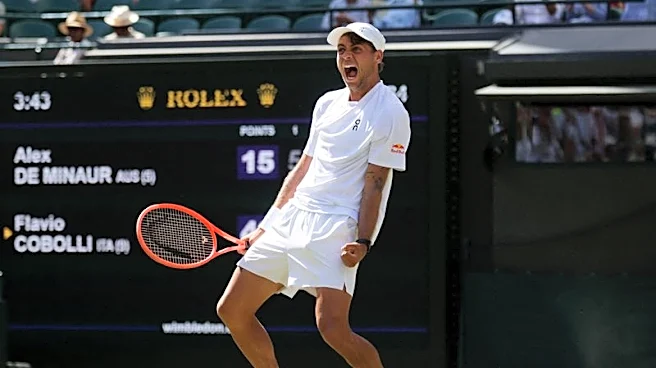
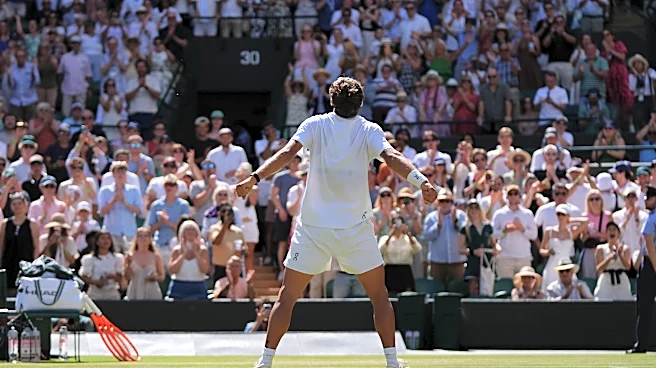
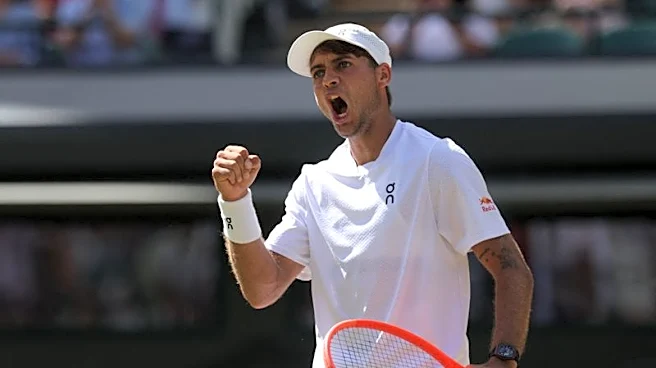
Alex de Minaur, an Australian tennis player, has expressed deep emotional distress following his exit from Wimbledon. De Minaur, who was seeded fifth, was defeated by Flavio Cobolli, the ninth seed, in the fourth round with scores of 7-5, 7-6 (4), 6-3.
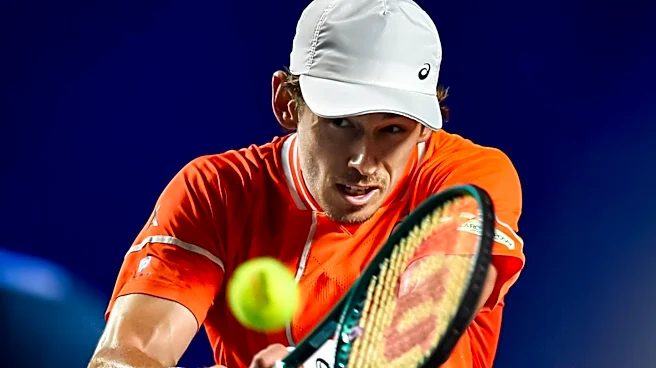
This loss ended one of de Minaur's promising opportunities to reach his first Grand Slam semifinal. In a post-match press conference, de Minaur shared his feelings of being 'broken inside,' highlighting the emotional toll of investing years into his career only to face such setbacks. He mentioned that he would be taking a break from tournaments, as the continuous cycle of goals and dreams feels increasingly out of reach. De Minaur's performance was critiqued by commentator Todd Woodbridge, who noted a lack of aggression and struggles with his service game, as de Minaur only managed to make half of his first serves during the match.
Why It's Important?
De Minaur's candid admission of his mental health struggles underscores the psychological pressures faced by professional athletes. His experience highlights the broader issue of mental health in sports, where the intense focus on performance can lead to significant emotional challenges. This situation may prompt discussions within the sports community about the need for better mental health support for athletes. Additionally, de Minaur's break from competition could impact his ranking and future performance, affecting his career trajectory. His openness may also encourage other athletes to speak out about their mental health, potentially leading to increased awareness and support systems within the sports industry.
What's Next?
De Minaur's decision to take a break from tournaments suggests a period of reflection and recovery. The tennis community and his fans will likely watch closely to see how he manages this time away from competition and whether it leads to a renewed focus and improved performance upon his return. The response from the sports community, including potential support from mental health professionals, could play a crucial role in his comeback. Additionally, his situation might influence tennis organizations to consider implementing more robust mental health resources for players.