




What's Happening?
US retail sales experienced a moderate increase in August, marking the eleventh consecutive month of gains, according to the CNBC/NRF Retail Monitor from the National Retail Federation (NRF). Total retail sales, excluding automobile dealers and gasoline
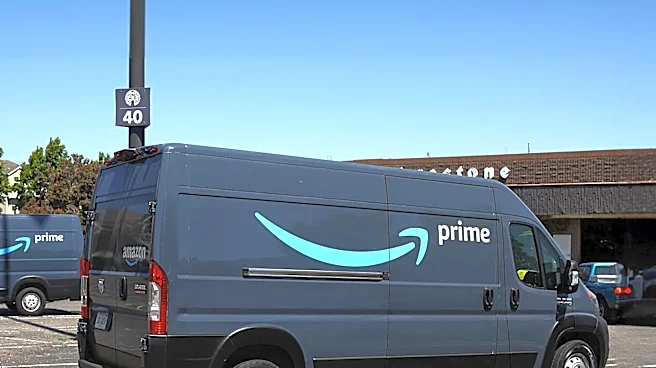
stations, rose by 0.22% month-over-month on a seasonally adjusted basis and increased by 3.87% year-over-year in August. This follows a 0.32% month-over-month increase and a 5.15% year-over-year increase in July. NRF President and CEO Matthew Shay attributed this steady climb to low unemployment rates and consistent wage gains, which have supported household spending. Consumers remained budget-conscious but utilized back-to-school promotions to maximize their purchasing power. Retailers, in turn, maintained their commitment to affordability to keep everyday products accessible for American families. Economists noted that a significant portion of August's strength was due to a rebound in non-store sales, which had sharply declined in July. This decline was largely attributed to 'seasonal noise' caused by shifts in the timing of Amazon's Prime Day and similar promotions from other major online retailers.
Why It's Important?
The continued, albeit moderate, growth in US retail sales for the eleventh consecutive month signals ongoing consumer resilience despite economic pressures. This sustained spending is a critical indicator of economic health, suggesting that low unemployment and steady wage gains are effectively counteracting concerns about inflation and consumer confidence. The strategic use of back-to-school promotions by both consumers and retailers highlights the importance of value and affordability in current market conditions. For businesses, understanding these purchasing behaviors and adapting promotional strategies is key to maintaining sales momentum. The rebound in non-store sales also underscores the significant and growing influence of e-commerce and major online shopping events on overall retail performance. This trend necessitates that retailers maintain robust online presences and flexible promotional calendars to capture consumer spending effectively. The overall picture suggests a consumer base that is discerning but still willing to spend, providing a foundation for continued economic activity in the retail sector.
What's Next?
Given the sustained growth, retailers are likely to continue focusing on strategies that emphasize affordability and value, especially as consumers remain budget-conscious. This could include more targeted promotions and loyalty programs. The influence of major online shopping events will likely lead to further adjustments in promotional timing and inventory management for both online and brick-and-mortar retailers. Businesses will need to closely monitor consumer confidence and inflation trends, as these factors could impact future spending patterns. The ongoing strength in the labor market and wage growth will be crucial for sustaining consumer purchasing power. Retailers may also explore innovative ways to integrate online and in-store experiences to cater to the evolving preferences of consumers who seamlessly navigate between channels. The industry will be watching for any shifts in unemployment rates or wage growth that could alter the current spending trajectory.
Beyond the Headlines
The consistent retail sales growth, even amidst fluctuating consumer confidence, points to a complex psychological dynamic in consumer behavior. While surveys might indicate caution, actual spending reflects a pragmatic approach to managing household budgets and taking advantage of opportunities like promotions. This divergence suggests that economic sentiment doesn't always directly translate into spending habits, especially when fundamental factors like employment and wages remain strong. The 'seasonal noise' around major online sales events also highlights how digital commerce is fundamentally reshaping traditional retail cycles and data interpretation. This could lead to a re-evaluation of how economic indicators are measured and understood in an increasingly digital economy. Furthermore, the emphasis on affordability and value could signal a long-term shift in consumer expectations, pushing retailers to innovate not just in product offerings but also in cost-efficiency and sustainable practices to meet these evolving demands.