




What's Happening?
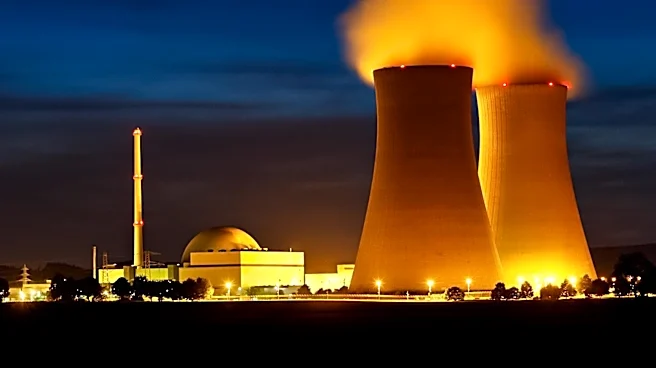
Constellation Energy, a prominent clean energy producer, has finalized approximately 8,500 MW of long-term power agreements this year. These agreements include a significant 20-year, 690 MW deal with Amazon at its Calvert Cliffs facility and a contract
with Google that facilitates roughly 890 MW of nuclear uprates. These strategic partnerships are expected to cover 45% of Constellation's clean baseload fleet by 2032, with CEO Joe Dominguez noting that nearly half of the company's clean output will be hedged for decades. The company currently pays a quarterly dividend of 42.65 cents per share, totaling $1.706 annualized, with a yield of about 0.68%. This move positions Constellation Energy as a key player in providing reliable power for the expanding AI infrastructure sector.
Why It's Important?
These long-term agreements are crucial for Constellation Energy, providing stable revenue streams and solidifying its position in the clean energy market, particularly as demand from data centers and AI infrastructure grows. The deals with major tech companies like Amazon and Google underscore the increasing need for reliable and clean power sources to support their operations. For the U.S. energy sector, this signifies a continued shift towards nuclear and other clean energy sources to meet industrial demands. Investors stand to benefit from the increased financial stability and projected earnings growth, with management aiming for over 20% Base EPS growth from 2026 to 2029. The long-term hedging strategy also mitigates market volatility risks, ensuring predictable cash flow for the company and its shareholders.
What's Next?
Constellation Energy anticipates continued growth, driven by these long-term contracts and the ongoing demand for clean energy, especially from the technology sector. The company's management is targeting Base EPS growth of over 20% from 2026 to 2029. However, potential regulatory developments, such as PJM's rules for connecting large loads and FERC's actions on colocation, could influence the pace of future data-center deals. The company expects FERC to act on colocation in the first half of 2027. If regulators impose limitations, new data-center agreements might take longer to finalize, potentially affecting the company's growth trajectory in that specific segment.
Beyond the Headlines
The trend of major tech companies securing long-term clean energy contracts highlights a broader societal and corporate commitment to sustainability and reducing carbon footprints. This development could accelerate the transition to cleaner energy sources across various industries, setting a precedent for other corporations to invest in similar long-term clean power agreements. It also underscores the critical role of nuclear energy in providing baseload power for energy-intensive operations like AI data centers. The stability offered by these contracts could encourage further investment in nuclear power infrastructure, potentially influencing national energy policy and grid modernization efforts to support a more sustainable and resilient energy future.