



What's Happening?
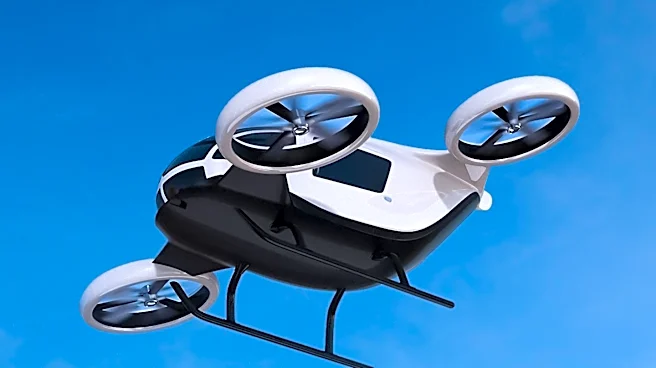
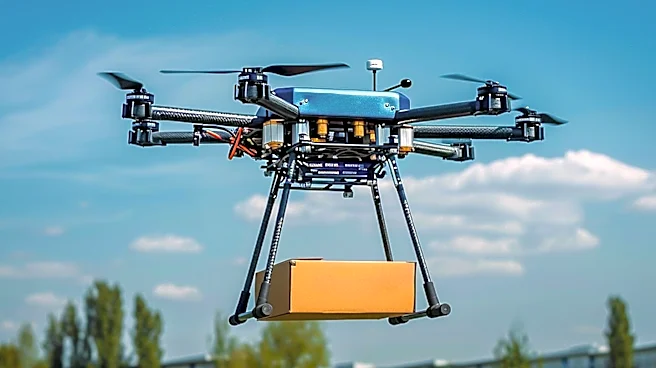
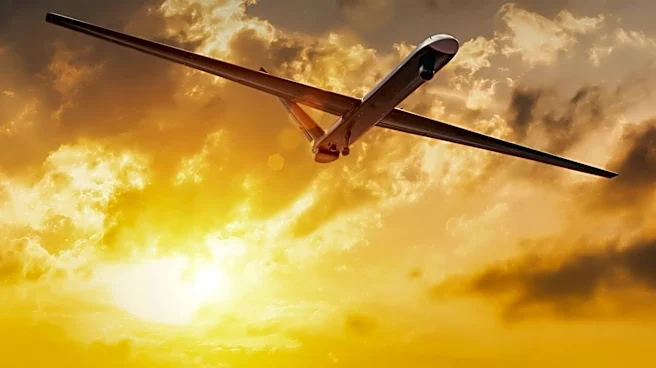
Beta Technologies has introduced the MV250, an autonomous hybrid-electric cargo aircraft, at the Farnborough Airshow. This aircraft is designed to operate without a pilot and can carry up to a ton of cargo, making it suitable for military applications
in dangerous areas. The MV250 can take off and land vertically, which enhances its operational flexibility in various terrains. Initially focused on civil electric aircraft, Beta Technologies has adapted its technology to meet the needs of military logistics, reflecting a growing trend towards autonomous systems in defense operations.
Why It's Important?
The development of the MV250 represents a significant advancement in military logistics and autonomous technology. As defense departments increasingly seek innovative solutions for supply chain challenges, the MV250 offers a potential tool for efficient and safe cargo transport in conflict zones. This shift towards autonomous aircraft could reduce the risk to human pilots and improve the speed and reliability of military operations. The MV250's introduction also highlights the broader trend of integrating hybrid-electric technology into military applications, which could lead to more sustainable and cost-effective operations.
What's Next?
Following its unveiling, the MV250 may undergo further testing and evaluation by military clients to assess its performance and reliability in real-world scenarios. If successful, it could lead to broader adoption of autonomous aircraft in military logistics, potentially transforming how supplies are delivered in conflict zones. Additionally, the development of the MV250 may spur further innovation in autonomous and hybrid-electric technologies, influencing future military and civilian aircraft designs.
Beyond the Headlines
The MV250's introduction raises questions about the future of warfare and the role of autonomous systems in military strategy. As these technologies become more prevalent, there may be ethical and legal considerations regarding their use in combat situations. The shift towards automation also reflects broader changes in the defense industry, where technological innovation is increasingly driving strategic decisions and capabilities.