



What's Happening?
Dorian LPG has reported a record quarterly performance for its fiscal first quarter of 2027, driven by disruptions in Middle East LPG supply and congestion at the Panama Canal. The company achieved an adjusted EBITDA of $165.4 million, with a time-charter-equivalent
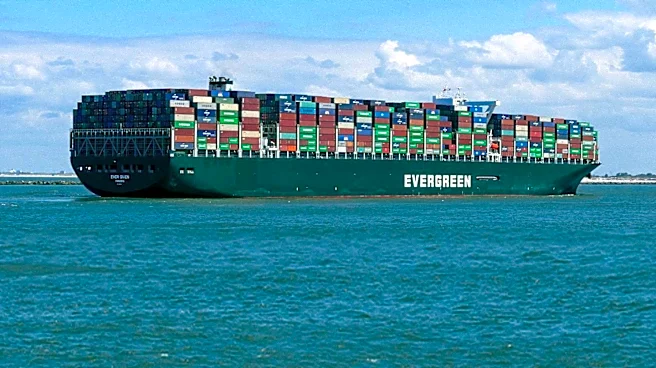
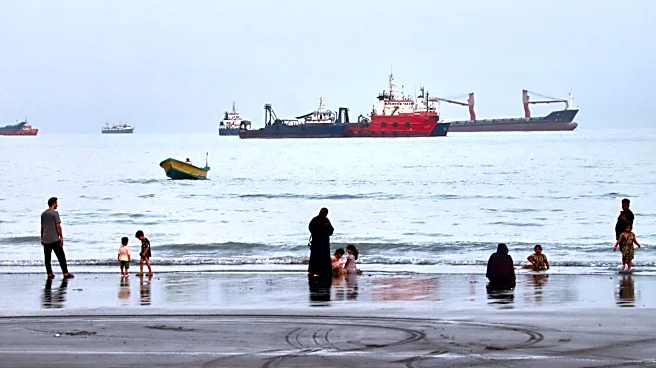
revenue per available day reaching $75,926, the highest in its history. The de facto closure of the Strait of Hormuz significantly reduced LPG supply from the Middle East, forcing importers like India and Indonesia to source LPG from the U.S. Gulf Coast. This shift increased shipping distances and ton-mile demand, contributing to a 20% year-over-year rise in U.S. LPG exports to a record 20.8 million tons. Dorian LPG also declared a $1-per-share dividend, marking its 20th payout.
Why It's Important?
The disruption in Middle East LPG supply has reshaped global trade routes, increasing reliance on U.S. exports and highlighting the strategic importance of the U.S. in global energy markets. This shift has implications for freight rates and shipping logistics, as longer routes and canal congestion drive up costs. The situation underscores the vulnerability of global supply chains to geopolitical tensions and the potential for the U.S. to capitalize on such disruptions. For Dorian LPG, the record earnings and increased liquidity position the company well for future fleet renewal and expansion, potentially enhancing its competitive edge in the maritime LPG transportation sector.
What's Next?
Dorian LPG plans to continue its fleet renewal program, with sales of older vessels and the construction of a new dual-fuel VLGC scheduled for delivery in 2029. The company is also evaluating refinancing options and potential fleet expansion opportunities. Market conditions remain uncertain, with freight rates having declined from record levels following a U.S.-Iran ceasefire memorandum. However, the company remains cautious about the stability of Middle East exports. The ongoing geopolitical situation and its impact on global LPG supply chains will be closely monitored by industry stakeholders.