


What's Happening?
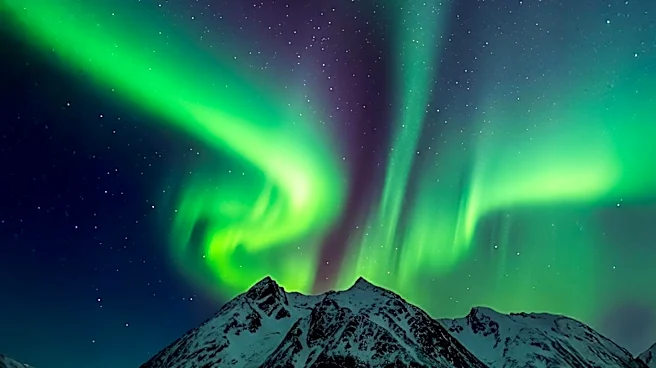
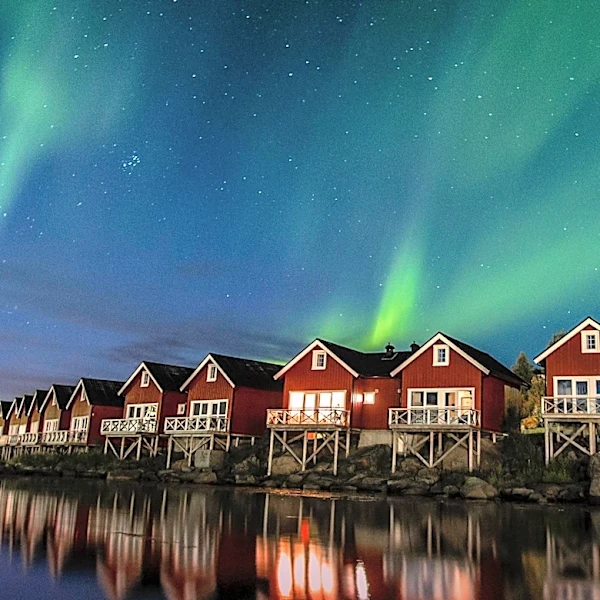
Tromsø, Norway, has solidified its reputation as a leading global destination for observing the Aurora Borealis, commonly known as the Northern Lights. Situated beneath the auroral oval, the city offers optimal conditions for aurora hunting from late
September to early April, with the period from November through February providing extended dark nights and a strong winter ambiance. The city boasts extensive tourism infrastructure, including a wide array of accommodations, restaurants, and tour operators, making it a practical base for visitors. While aurora sightings are not guaranteed due to natural variability in solar activity and weather, guided tours significantly enhance the chances of witnessing the phenomenon by moving away from city lights and monitoring forecasts. For instance, specialized tours like the Aurora Dinner Cruise combine dining with potential aurora viewing, though success remains dependent on natural conditions.
Why It's Important?
The rise of Tromsø as a Northern Lights hub highlights the growing global interest in astrotourism and unique natural phenomena. This trend has significant economic implications for regions like Northern Norway, boosting local tourism industries, creating jobs, and supporting related businesses such as hospitality, transportation, and specialized tour operations. For U.S. travelers, this means increased accessibility and diverse options for experiencing the Northern Lights, with well-developed infrastructure simplifying travel logistics. The emphasis on guided tours also underscores the value of local expertise in navigating unpredictable natural events, ensuring a more informed and potentially successful viewing experience. The sustained popularity of destinations like Tromsø can also drive further investment in Arctic tourism, potentially leading to new travel packages and experiences for a global audience.
What's Next?
The continued popularity of Tromsø for Northern Lights tourism is likely to spur further development in sustainable tourism practices to manage the influx of visitors and preserve the natural environment. Tour operators may introduce more specialized packages, such as photography-focused tours or combined adventure experiences like husky sledding and snowmobiling, to cater to diverse traveler interests. There could also be an increased focus on real-time aurora forecasting technologies and mobile applications to provide visitors with the most up-to-date information, further enhancing the viewing experience. As demand grows, the region may also see an expansion of direct flight routes and improved transportation links, making it even more accessible for international tourists, including those from the U.S.
Beyond the Headlines
The allure of the Northern Lights in Tromsø extends beyond mere visual spectacle, touching upon cultural and scientific dimensions. The phenomenon has deep roots in indigenous folklore and mythology, with various cultures attributing spiritual significance to the aurora. This cultural heritage adds a layer of depth to the tourist experience, fostering a greater appreciation for the natural world and its historical interpretations. Scientifically, the Northern Lights offer a tangible connection to space weather and solar activity, providing a unique educational opportunity for visitors to understand complex astrophysical processes. The pursuit of the aurora also encourages a deeper engagement with the Arctic environment, promoting awareness of its unique ecosystems and the challenges posed by climate change, even as tourism contributes to the local economy.