





What's Happening?
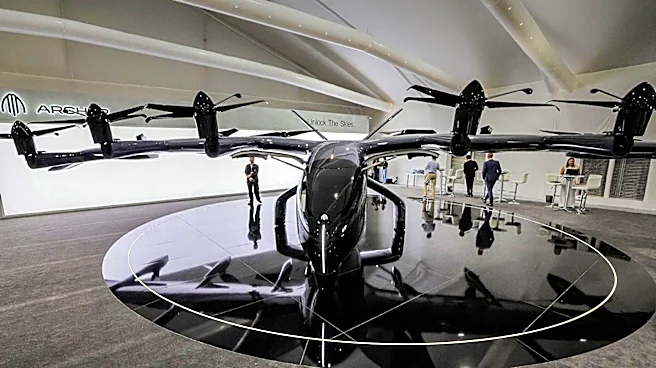
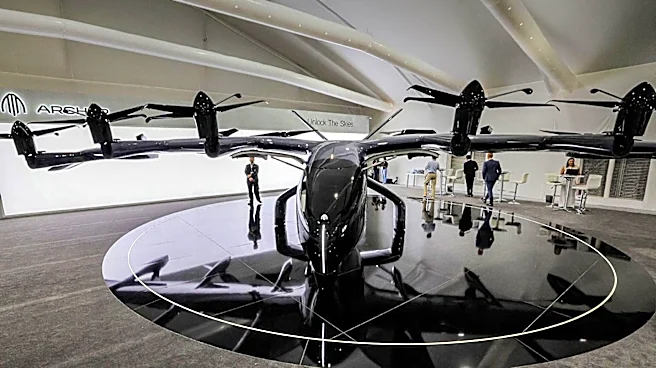
Shares of Joby Aviation and Archer Aviation experienced declines in premarket trading, struggling to maintain gains achieved during a previous rally. Joby Aviation's stock dipped over 1% after a 6.94% increase in the prior session, while Archer Aviation slipped
more than 1% following a 5.50% rise. This downturn comes after both companies, along with Vertical Aerospace, saw their stocks bounce back in premarket trading due to a broader technology rebound. Despite these recent fluctuations, electric vertical takeoff and landing (eVTOL) aircraft makers are still facing significant challenges. Over the past three months, Archer's shares have decreased by 49.42%, Joby's by 46.45%, and Vertical Aerospace's by 63.82%. As of Monday's close, Joby was at $3.85, Archer at $3.07, and Vertical Aerospace at 28 cents. The broader industry is grappling with issues such as aircraft certification, high production costs, and the complex process of establishing commercially viable passenger services.
Why It's Important?
The faltering of Joby and Archer Aviation stocks after a brief rally underscores the inherent volatility and significant risks associated with the emerging eVTOL industry. Investors are currently weighing the long-term potential of urban air mobility against the substantial near-term hurdles. The industry's struggle with regulatory clearance, particularly aircraft certification, is a major impediment to commercial operations and investor confidence. High production costs and the challenge of building out the necessary infrastructure for air taxi services further complicate the path to profitability. This situation highlights a critical period for these companies, as they need to demonstrate tangible progress on these fronts to attract and retain investor interest. The substantial losses experienced over the past three months indicate a market sentiment that is cautious about the timeline for these technologies to become mainstream and financially viable, impacting the broader U.S. aerospace and transportation sectors.
What's Next?
The immediate future for Joby and Archer Aviation, and the eVTOL industry as a whole, will be defined by their ability to address the core challenges of aircraft certification, production, and commercial service establishment. Investors will be closely watching for regulatory approvals, which are essential for moving beyond test flights to passenger operations. Key production milestones, such as scaling manufacturing capabilities and reducing costs, will also be critical indicators of progress. The successful launch of commercial services, even on a limited basis, could significantly boost investor confidence and provide a clearer path to revenue generation. Furthermore, the development of robust charging infrastructure and the integration of eVTOLs into existing air traffic management systems are crucial next steps. The industry's ability to overcome these hurdles will determine whether flying taxi makers can build sustainable businesses and recover recent market losses, influencing the future of urban transportation in the U.S.
Beyond the Headlines
The struggles faced by eVTOL companies like Joby and Archer Aviation extend beyond financial performance, touching upon broader societal and technological implications. The vision of flying taxis promises to revolutionize urban mobility, offering solutions to traffic congestion and potentially reducing travel times. However, the realization of this vision requires not only technological breakthroughs but also significant public acceptance and robust regulatory frameworks. Ethical considerations, such as noise pollution in urban areas, equitable access to advanced transportation, and the environmental impact of battery production and disposal, are critical long-term issues. The current market fluctuations reflect the inherent tension between ambitious technological innovation and the practical realities of implementation in a complex world. The success or failure of these companies will not only shape the future of air travel but also influence how cities are designed and how people interact with their urban environments, prompting deeper discussions about the role of technology in addressing modern challenges.