






What's Happening?
Actress Elle Fanning appears as a young Effie Trinket in the recently released film, 'The Hunger Games: Sunrise on the Reaping'. This movie, which topped the domestic box office with $120 million on its opening weekend, is a prequel that delves into the history
of the Hunger Games universe. The narrative of 'Sunrise on the Reaping' focuses on the games of Haymitch Abernathy and aims to deepen the audience's understanding of the Capitol's propaganda and the early sparks of rebellion against President Snow. The film, like its novel counterpart, has been noted for its extensive connections to the original trilogy, featuring numerous returning characters and references. This approach, termed 'prequel-itis' by some critics, aims to link the new story closely with the established lore, though it sometimes risks overshadowing new elements with familiar faces.
Why It's Important?
The inclusion of Elle Fanning as a young Effie Trinket in 'The Hunger Games: Sunrise on the Reaping' is significant for the franchise's continued appeal and its strategy in expanding the cinematic universe. By casting a recognizable actress in a younger version of an established character, the film aims to draw in both long-time fans and new audiences. This move highlights a broader trend in Hollywood where prequels and spin-offs rely on familiar characters to maintain audience engagement and box office success. The film's substantial opening weekend gross of $120 million underscores the commercial viability of this strategy, demonstrating that audiences are keen to revisit the world of Panem, especially when it offers new perspectives on beloved figures. However, the critique of 'prequel-itis' also points to a potential challenge: balancing fan service with original storytelling to avoid franchise fatigue and ensure the longevity of the series.
What's Next?
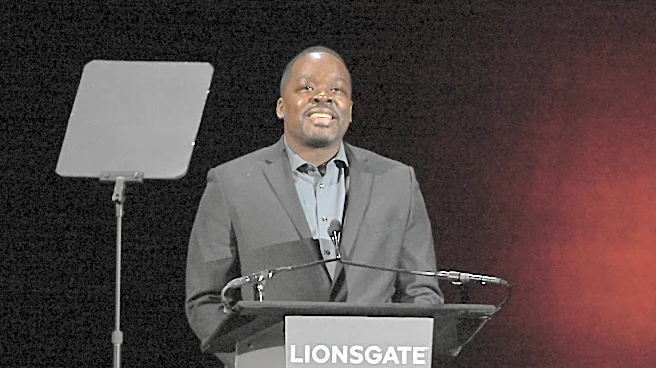
Following the commercial success of 'The Hunger Games: Sunrise on the Reaping', the future of the franchise largely depends on author Suzanne Collins. Lionsgate chairman Adam Fogelson has indicated that no new films will be produced until Collins writes another book. This suggests a cautious approach, prioritizing story development over rapid cinematic expansion. Potential future narratives could explore other known characters like Finnick Odair or Plutarch Heavensbee, or even delve into the 'Dark Days' before the Hunger Games were established. However, the film's performance, particularly compared to 'The Ballad of Songbirds and Snakes', suggests that audiences prefer stories featuring the spectacle of the Hunger Games and familiar elements. The decision to continue the franchise will likely weigh the desire for new content against the risk of diluting the series' impact through excessive prequels or spin-offs.
Beyond the Headlines
The phenomenon observed in 'The Hunger Games: Sunrise on the Reaping', dubbed 'prequel-itis', reflects a broader industry challenge in managing successful franchises. While leveraging established characters and lore can guarantee initial audience interest and box office returns, it also risks creating a narrative that feels overly reliant on past successes rather than forging new ground. The balance between nostalgia and innovation is crucial for long-term franchise health. For 'The Hunger Games', the decision to feature a young Effie Trinket, played by Elle Fanning, exemplifies this strategy. It taps into the audience's existing emotional investment in the characters while attempting to offer a fresh perspective. However, the critical reception regarding the 'nonstop barrage of returning characters' suggests that there is a fine line between enriching a universe and making it feel too insular, potentially limiting its appeal to new generations of viewers.