



What's Happening?
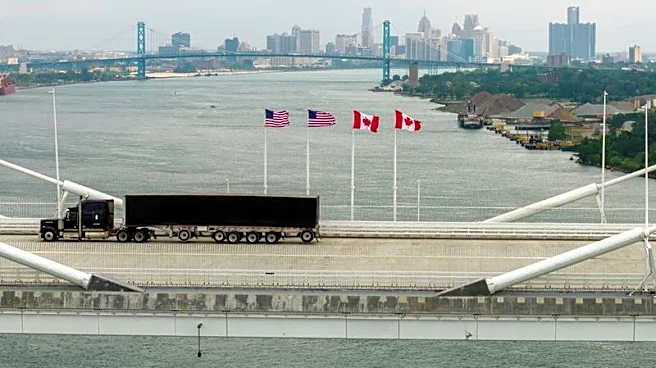
The U.S. has threatened to impose 50% tariffs on $28 billion worth of Canadian exports, including honey, dairy, alcohol, and plywood. British Columbia, in particular, faces significant impact as it accounts for an estimated 13% of these exports, more
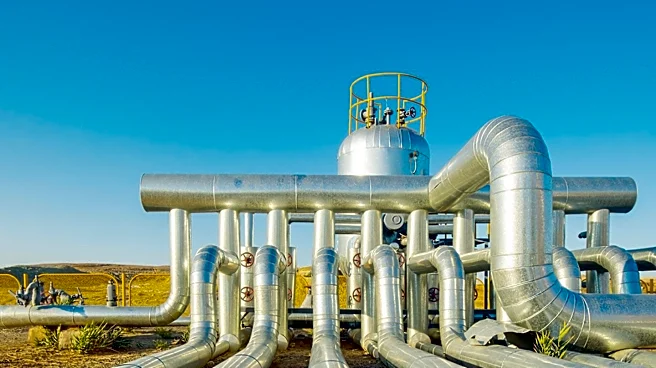
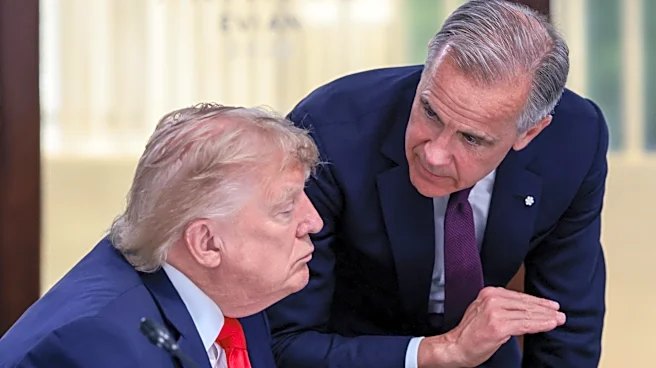
than any other Canadian province. The deadline for these tariffs was set for Tuesday evening. However, President Trump announced on Truth Social that the tariffs have been paused for three days. This pause is attributed to a deal reached between the U.S. and Canada regarding the Keystone XL Pipeline, pending the finalization of documents. This development leaves B.C. businesses in a state of uncertainty, as the tariffs could still be implemented after the three-day reprieve. Canadian Prime Minister Mark Carney discussed the issue with President Trump, though details of their talks were not disclosed.
Why It's Important?
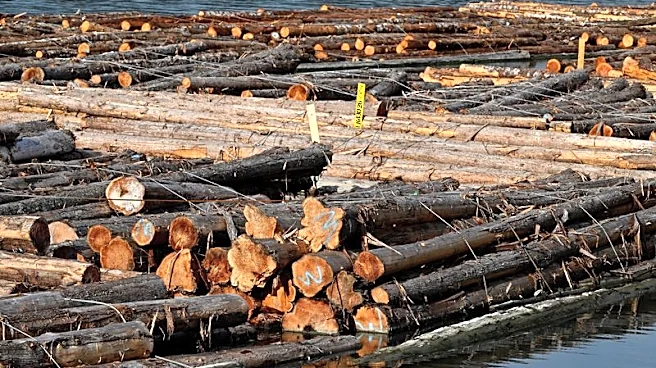
The potential imposition of these tariffs carries significant economic implications for both Canada and the U.S. For Canadian industries, particularly beekeepers and forestry businesses, a 50% tariff would necessitate lowering prices to remain competitive in the U.S. market, potentially leading to bankruptcies and severe financial strain. Kim Haakstad of the Council of Forest Industries highlighted that resolving lumber tariffs would foster prosperity, while additional tariffs would make it difficult for the Canadian industry and increase costs for U.S. consumers. From a U.S. perspective, while tariffs aim to protect domestic industries, they can also lead to higher consumer prices for imported goods. The pause in tariffs, linked to the Keystone XL Pipeline deal, indicates the interconnectedness of trade policy with broader bilateral agreements and strategic interests between the two nations. The situation underscores the vulnerability of specific industries to trade disputes and the broader economic ripple effects.
What's Next?
The immediate future hinges on the finalization of documents related to the Keystone XL Pipeline deal within the three-day tariff pause. If the deal is finalized, it could lead to the permanent suspension or renegotiation of the proposed tariffs. Conversely, if the deal falters, the tariffs could be implemented, causing significant disruption to Canadian exporters and potentially leading to retaliatory measures. B.C. Premier David Eby has indicated that businesses affected by new tariffs could access a $1.5 billion federal emergency support fund, though the province's ability to provide further assistance is constrained by a record deficit. Stakeholders, including B.C.'s Minister of Forests Ravi Parmar, are awaiting further developments and are prepared to support affected businesses. The ongoing trade talks between Canada and the U.S. will continue to be closely monitored for any breakthroughs or escalations.
Beyond the Headlines
This situation highlights the complex interplay between trade policy, energy infrastructure, and international relations. The use of tariffs as leverage in negotiations, as seen with the Keystone XL Pipeline, demonstrates how economic measures can be intertwined with broader geopolitical objectives. The potential impact on specific sectors, such as honey production and forestry, underscores the vulnerability of specialized industries to shifts in trade policy. Furthermore, the reliance of Canadian provinces like British Columbia on exports to the U.S. reveals the deep economic integration between the two countries. The episode also brings to light the challenges faced by governments in supporting industries affected by trade disputes, especially when facing domestic financial constraints. The outcome of these negotiations could set a precedent for future trade discussions and the use of economic tools in international diplomacy.