



What's Happening?
The energy sector is experiencing a significant shift, with capital increasingly flowing towards companies capable of operating power plants rather than solely developing new generation capacity. This trend is driven by unprecedented demand from hyperscale
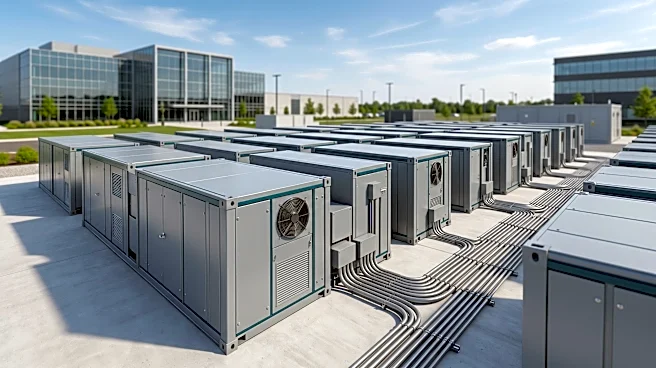
data center buildouts, which require continuous, high-availability power. Major gas turbine manufacturers are quoting lead times of four years or more, and grid interconnection queues are similarly long. This has led developers to bypass traditional grid connections by building behind-the-meter and private grids, utilizing rapidly deployable solutions like reciprocating engines, fuel cells, and battery storage paired with microgrids. The acquisition of IHI Power Services Corp. by Kyuden Energy Partners Corp. (an arm of Japan’s Kyushu Electric Power Co.) exemplifies this, as Kyuden International Corp. purchased operational expertise rather than just power plants. Tony Dabbene, CEO of IHI Power Services, highlighted the dynamic environment, noting that the constraint has moved from building plants to effectively running them.
Why It's Important?
This shift has profound implications for the U.S. energy landscape and its ability to support critical infrastructure like data centers. The long lead times for traditional power generation equipment and grid connections are creating bottlenecks, forcing a re-evaluation of investment strategies. Companies with multi-fuel operational expertise, capable of managing diverse generation sources like natural gas, hydro, biomass, wind, solar, and storage, are gaining a competitive edge. This focus on operational capability ensures reliability and high availability, which are crucial for the 'around-the-clock computing' demands of data centers. The trend suggests that the value chain in the energy sector is evolving, with a premium placed on the human capital and technical know-how required to maintain and optimize complex power systems, rather than just the physical assets themselves. This could lead to increased M&A activity focused on acquiring operational talent and platforms.
What's Next?
The immediate priority for companies like Kyuden Energy Partners Corp. is organic growth, leveraging their newly acquired operational capabilities. However, a significant challenge remains in staffing this expansion, as qualified operators and technicians are scarce. While Kyushu Electric’s workforce might offer short-term support, the long-term solution for staffing U.S. plant floors is a critical hurdle. This scarcity of skilled personnel will likely drive increased investment in training and recruitment within the energy sector. Furthermore, the continued demand from data centers will likely accelerate the adoption of behind-the-meter solutions and microgrids, potentially decentralizing power generation and reducing reliance on the traditional grid. This could also spur innovation in energy storage and rapid deployment technologies to meet immediate power needs.
Beyond the Headlines
The underlying issue of a skilled workforce shortage in the energy sector is a deeper implication of this trend. As the industry pivots towards more complex, diversified, and rapidly deployable power solutions, the demand for specialized operational and technical talent will only intensify. This highlights a broader societal challenge in ensuring that educational and vocational training systems are aligned with the evolving needs of critical industries. Ethically, the reliance on natural gas for data centers, despite efforts for cleaner sourcing and carbon capture-ready designs, underscores the ongoing tension between energy demand, economic growth, and environmental sustainability. The shift towards operational expertise also suggests a move towards more resilient and adaptable energy systems, capable of navigating supply chain disruptions and geopolitical uncertainties, which could have long-term implications for national energy security.