






What's Happening?
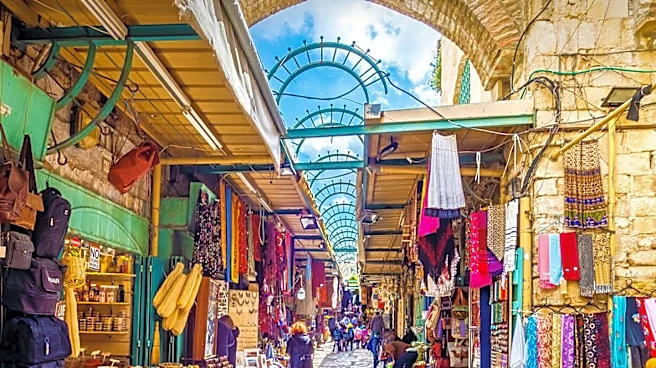
Istanbul's Grand Bazaar, one of the world's oldest and largest covered markets, continues to thrive by preserving centuries-old craftsmanship and a unique culture of production. Established by Ottoman Sultan Mehmed II in 1453, the bazaar has expanded
over hundreds of years, surviving major earthquakes and evolving into a hub for traditional commerce. Veteran jeweler Umit Berksoy, 78, highlights a hidden world behind the vibrant tourist-facing market, where tiny workshops house master artisans from various religious minorities—Armenians, Greeks, Jews, and Syriacs—who have worked side by side for generations. These artisans, like goldsmith Sevan Harunyan and stone-setter Hrant Zorbas, continue the master-apprentice tradition, creating handmade jewelry and other goods that embody the bazaar's enduring spirit, despite modern challenges and changing consumer tastes.
Why It's Important?
The Grand Bazaar's continued existence and its preservation of traditional crafts are significant for cultural heritage and economic diversity. In an increasingly globalized and mass-produced world, the bazaar represents a living museum of artisanal skill and inter-communal cooperation. Its economic model, based on skilled craftsmanship and personalized service, offers a counter-narrative to modern retail trends. For Turkey, it's a vital tourist attraction and a source of national pride, showcasing a rich history of trade and artistry. The resilience of these traditional businesses, even amidst economic fluctuations and the rise of modern shopping malls, underscores the enduring value placed on handmade goods and the cultural importance of such historical marketplaces.
What's Next?
The future of the Grand Bazaar will likely involve a continued balance between attracting modern tourism and preserving its traditional core. Efforts may focus on supporting the master-apprentice system to ensure the transfer of skills to younger generations, as seen with Sevan Harunyan's sons incorporating computerized design while learning the craft. The bazaar will need to adapt to changing economic conditions and consumer preferences while maintaining its unique identity. There may be initiatives to promote the stories of its artisans and the historical significance of their work to a broader audience, ensuring its legacy as a center of craftsmanship and cultural exchange endures for centuries to come.
Beyond the Headlines
The Grand Bazaar's story extends beyond commerce, touching upon themes of cultural identity, community resilience, and the human element in production. The collaboration among diverse religious minorities within the bazaar for centuries highlights a historical model of peaceful coexistence and shared economic prosperity. The artisans' dedication to their craft, often passed down through families, speaks to a profound connection between work and identity, contrasting with the often impersonal nature of modern labor. The bazaar also serves as a powerful symbol of continuity, demonstrating how ancient traditions can adapt and persist in the face of rapid societal and technological change, offering lessons in sustainability and cultural preservation.