




What's Happening?
Corn futures in the United States have seen a notable increase, rebounding from previous losses due to deteriorating crop conditions. On Turnaround Tuesday, contracts rose by 7 to 8 cents, with the CmdtyView national average Cash Corn price increasing
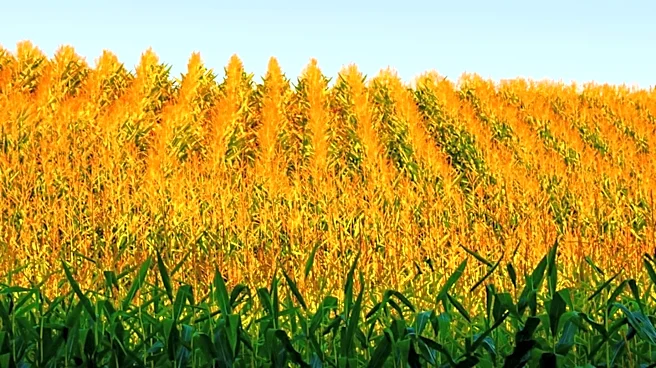
by 8 cents to $4.29 1/2. The USDA reported a private export sale of 197,272 metric tons to unknown destinations for the 2026/27 shipment. The latest Crop Progress report indicated that 78% of the US corn crop had reached the silking stage by July 26, which is 4 percentage points ahead of the five-year average. However, condition ratings fell by 4% to 63% in good to excellent condition, with the Brugler500 index dropping 11 points to 361. While Missouri, North Carolina, and Tennessee saw improvements, other states experienced declines, notably Colorado, Michigan, North Dakota, South Dakota, and Nebraska. Meanwhile, Brazil's ANEC has adjusted its July corn export estimate to 3.3 million metric tons, a decrease from last week's estimate but still higher than last year's figures.
Why It's Important?
The rise in corn futures is significant for the agricultural sector, particularly for farmers and traders who rely on stable crop conditions and prices. The deteriorating conditions could lead to increased volatility in the market, affecting pricing strategies and export plans. The USDA's export sale announcement suggests ongoing demand for US corn, which could bolster the domestic agricultural economy despite challenges. The condition ratings and progress reports are crucial indicators for stakeholders to assess the health of the crop and make informed decisions. Additionally, Brazil's export adjustments highlight the competitive dynamics in the global corn market, influencing US export strategies and international trade relations.
What's Next?
Stakeholders in the agricultural sector will likely monitor weather patterns and crop conditions closely to anticipate further changes in corn futures. The USDA's upcoming reports and export announcements will be critical in shaping market expectations. Farmers may need to adjust their planting and harvesting strategies to mitigate risks associated with deteriorating conditions. Internationally, Brazil's export figures will continue to impact global supply and demand dynamics, potentially affecting US market share. Traders and investors will keep a close eye on these developments to optimize their positions in the futures market.