




What's Happening?
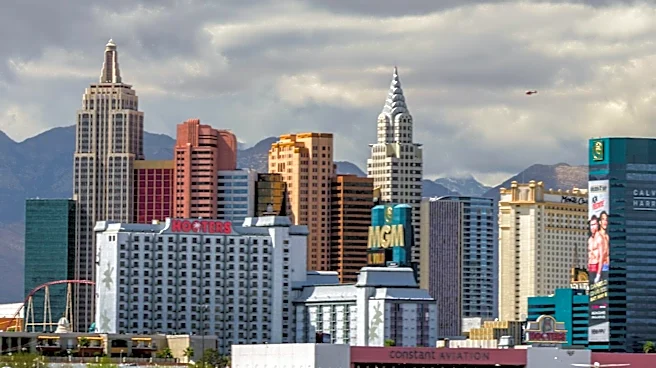
MGM Resorts and Caesars Entertainment have both reported declines in their Las Vegas revenue and adjusted earnings for the third quarter. This downturn coincides with a significant increase in airfares, with domestic airfares rising over 10% since March
and Las Vegas-specific airfares climbing more than 40% since last summer. Despite these challenges, Las Vegas visitor arrivals remained flat in September, holding steady at just over 3 million, matching the previous year's total. Casino revenue on the Las Vegas Strip was nearly unchanged at $693.4 million, and statewide gaming revenue reached approximately $1.28 billion. However, hotel metrics show a decline, with overall hotel occupancy down 0.5%, average daily room rates falling 6% market-wide and 10% on the Strip, and revenue per available room dropping 12% on the Strip. Harry Reid International Airport also saw an 8% decrease in passengers compared to the same month last year.
Why It's Important?
The reported declines in revenue for major casino operators like MGM Resorts and Caesars Entertainment, coupled with rising airfares and decreasing hotel metrics, signal potential headwinds for the Las Vegas tourism and gaming industry. While gaming revenue has remained resilient, the drop in hotel occupancy, average daily room rates, and airport traffic indicates a struggle to attract and accommodate visitors. The significant increase in air travel costs could deter potential tourists, impacting the overall economic health of Las Vegas, which heavily relies on tourism. This situation could lead to increased competition among operators to attract visitors, potentially through promotions or enhanced experiences, to offset the impact of higher travel costs and declining hotel performance. The mixed results across Nevada markets, with North Las Vegas gaming revenue rising while downtown Las Vegas and Laughlin saw declines, highlight a varied economic landscape within the state.
What's Next?
Casino operators and tourism officials are now focusing on the fourth quarter, anticipating that major sporting events, conventions, and seasonal attractions will help boost performance in the final months of the year. The resilience of casino revenue, despite the challenges in hotel and air travel sectors, suggests that operators will likely continue to prioritize strategies to draw additional visitors. Efforts may include targeted marketing campaigns, special event programming, and potentially partnerships to mitigate the impact of high airfares. The industry will closely monitor airfare trends and visitor arrival numbers to assess the effectiveness of these strategies and determine if the anticipated fourth-quarter events can reverse the current negative trends in hotel metrics and airport traffic. The long-term sustainability of Las Vegas's tourism model will depend on its ability to adapt to changing travel costs and consumer behaviors.
Beyond the Headlines
The current situation in Las Vegas, characterized by resilient gaming revenue but declining hotel and air travel metrics, points to a deeper shift in the tourism landscape. The rising cost of air travel, particularly to a destination like Las Vegas, could lead to a re-evaluation of travel budgets by consumers, potentially favoring shorter trips or alternative destinations. This could also prompt a strategic pivot for Las Vegas, moving beyond its traditional reliance on mass tourism to focus more on high-value visitors attending conventions or major events. The disparity in gaming revenue performance across different areas of Nevada suggests that local economic factors and specific market appeals are becoming increasingly important. This trend could lead to a more diversified approach to tourism development within the state, with different regions catering to distinct visitor segments. The long-term implications could include a restructuring of pricing strategies for hotels and attractions to remain competitive in a challenging economic environment.