







What's Happening?
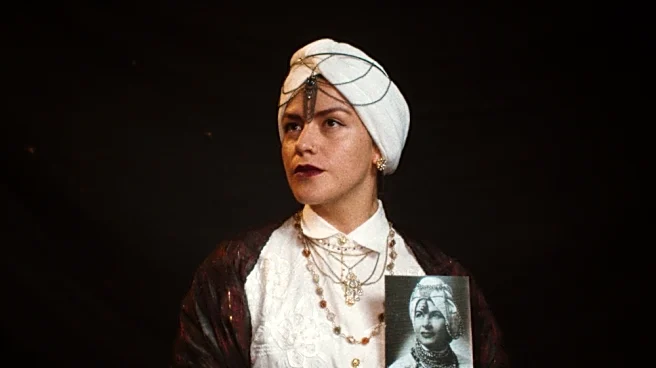
Natalia Solórzano Vásquez's upcoming hybrid documentary, 'Spells to Revive a Witch,' has secured new partnerships with Spain's Testaferro and Uruguay's Guay Films. The project, produced by Costa Rica's Sputnik Films, is set to be showcased at the Costa Rica Media
Market. The film explores the life of Soralla de Persia, a Costa Rican fortune teller who gained fame in the 1960s. Solórzano Vásquez discovered Soralla while researching women featured in Costa Rican media, noting her disappearance from collective memory despite her past prominence. The documentary aims to revive Soralla's story through a performative lens, focusing on memory and the roles of women in society.
Why It's Important?
The collaboration between international film companies highlights the growing interest in Latin American cinema, particularly stories that delve into cultural memory and women's roles. 'Spells to Revive a Witch' not only revives a forgotten figure but also addresses broader themes of identity and societal expectations. This project contributes to the increasing visibility of female filmmakers in Costa Rica, a region witnessing a surge in diverse storytelling. By exploring the intersection of memory and identity, the film could resonate with audiences interested in feminist narratives and cultural history, potentially influencing future projects in the region.
What's Next?
As 'Spells to Revive a Witch' heads to the Costa Rica Media Market, it may attract further international interest and distribution opportunities. The film's development through programs like the Rueda Program of the Spanish Film Academy and CIMA Impulsa suggests a strategic push for broader recognition. The documentary's success could pave the way for more projects that explore underrepresented stories in Latin America, encouraging filmmakers to challenge traditional narratives and expand the cinematic landscape.
Beyond the Headlines
The film's focus on memory and identity raises questions about how societies remember and forget influential figures, particularly women. By reconstructing Soralla's story, the documentary challenges viewers to consider the narratives that are preserved and those that fade away. This exploration of memory as a dynamic and transformative force could inspire discussions on cultural preservation and the role of storytelling in shaping collective consciousness.