




What's Happening?
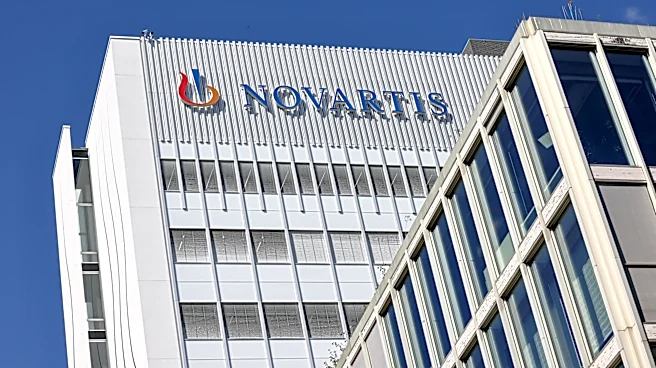
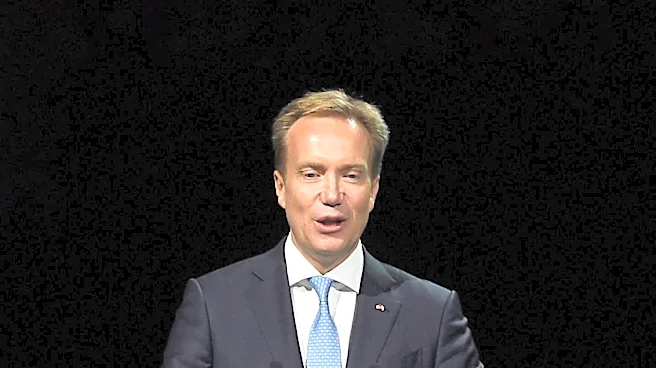
Vas Narasimhan, CEO of Novartis and a board member of Anthropic, has expressed skepticism regarding the AI industry's projections of curing cancer within five to ten years. Narasimhan argues that while AI holds significant potential, it will realistically
take a decade to reduce the drug development process by approximately four years. He highlights a fundamental difference in understanding: the tech industry approaches the problem with an 'engineering mindset,' whereas pharmaceutical companies recognize the limited knowledge of the human body. According to Narasimhan, only about 5% of the human body's functions are understood, compared to a much higher proportion in areas like coding and language, where AI has seen greater success. Novartis itself is utilizing AI in its development process, particularly in early drug discovery, where it has been successful in accelerating phases that typically take four years by up to two years.
Why It's Important?
This perspective from a leading pharmaceutical executive is important because it tempers the often-optimistic claims made by the AI industry regarding medical breakthroughs. It underscores the complex biological realities and regulatory hurdles inherent in drug development, particularly for diseases like cancer. Narasimhan's view suggests that while AI will undoubtedly be a powerful tool, it is not a standalone solution that can bypass the intricate and often unpredictable nature of human biology. This nuanced outlook could influence investment strategies in both the pharmaceutical and AI sectors, potentially shifting focus from overly ambitious short-term goals to more realistic, long-term applications of AI in drug discovery and development. It also highlights the ongoing need for traditional clinical trials and animal testing, emphasizing that AI's role is to augment, not entirely replace, established scientific methodologies.
What's Next?
Narasimhan predicts that within a decade, AI could reduce the average drug development timeline from 12 years to eight years and improve the success rate of drugs entering clinical trials from 8% to 12%. However, he maintains that extensive clinical trials will remain a necessity to test biological functions in animals and humans. The debate between the AI industry's ambitious timelines and the pharmaceutical sector's more cautious approach is expected to continue, influencing how regulators might adapt to new AI-driven drug development processes. Future developments will likely involve continued collaboration between AI companies and pharmaceutical firms, with a focus on integrating AI tools into specific stages of drug discovery where they can provide the most tangible benefits, such as accelerating early research and improving target identification, rather than entirely overhauling the entire development pipeline.
Beyond the Headlines
The divergence in perspectives between the AI industry and pharmaceutical leaders like Narasimhan points to a broader ethical and scientific discussion about the responsible integration of artificial intelligence into critical fields like medicine. The 'engineering mindset' versus the 'biological reality' highlights the challenge of applying AI, which thrives on vast, structured data, to the inherently complex and often unpredictable systems of the human body. This situation also raises questions about public expectations regarding medical advancements; overpromising by the AI industry could lead to disillusionment if breakthroughs do not materialize within predicted timelines. Furthermore, the emphasis on the limited understanding of human biology suggests that while AI can process existing data, fundamental scientific research into biological mechanisms remains paramount for truly transformative medical progress, rather than solely relying on AI to find patterns in incompletely understood systems.