





What's Happening?
Kansas State University horticulture expert Matt McKernan has issued advice for gardeners on how to prepare roses and strawberries for the upcoming winter months. With November experiencing unseasonably warm temperatures in Kansas, McKernan emphasizes
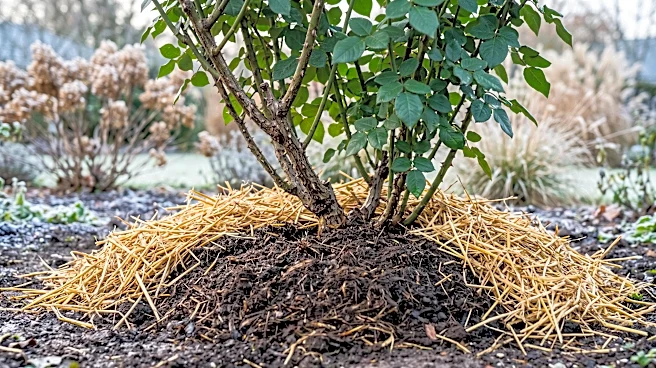
the importance of timely winterization to protect plants from freezing conditions. For roses, he recommends waiting until after several hard frosts but before the ground freezes to prevent mold growth or damage to the graft union. Gardeners should clean debris around rose plants, mound soil or compost 8-10 inches high, and then add a four-inch layer of mulch once the ground has frozen. Canes should be pruned to 36 inches and tied loosely to prevent wind damage. For strawberries, a three-inch layer of straw mulch is advised after several frosts but before a heavy freeze, typically between Thanksgiving and Christmas in Kansas. This helps protect fruit buds, roots, and crowns from sudden temperature drops and prevents plants from being heaved out of the soil due to repeated freezing and thawing.
Why It's Important?
This guidance is crucial for home gardeners and agricultural enthusiasts in Kansas and similar climate zones, as proper winterization directly impacts the survival and health of rose bushes and strawberry plants. Without adequate protection, these plants can suffer significant damage or even death during harsh winter conditions, leading to financial losses for commercial growers and disappointment for hobbyists. McKernan's advice helps ensure that plants can withstand cold temperatures, preventing issues like root exposure, bud damage, and mold. The timing of these actions is particularly important; winterizing too early can promote disease, while waiting too long risks irreversible damage. By following these steps, gardeners can safeguard their investments and ensure a successful growing season in the following spring, contributing to local horticulture and food production.
What's Next?
Gardeners in Kansas and surrounding regions are advised to monitor local weather forecasts closely for the onset of hard frosts and freezing ground conditions to determine the optimal time for applying McKernan's winterization techniques. As temperatures continue to drop, the focus will shift from preparation to maintenance, ensuring that mulch layers remain adequate throughout the winter. In the spring, when the ground thaws, gardeners will need to remove the protective layers of mulch and soil from the base of roses and strawberries to allow for new growth. Kansas State University's Department of Horticulture and Natural Resources will likely continue to provide updates and further guidance through their weekly Horticulture Newsletter, addressing any emerging concerns or specific conditions that may arise during the winter and early spring.
Beyond the Headlines
The detailed advice from Kansas State University highlights a broader theme of climate adaptation in horticulture. As weather patterns become more unpredictable, with unseasonably warm periods followed by sudden cold snaps, the traditional timing for gardening practices needs to be re-evaluated. McKernan's emphasis on observing specific environmental cues rather than adhering strictly to calendar dates reflects a growing need for flexible and responsive gardening strategies. This approach not only helps individual gardeners but also contributes to the resilience of local food systems and ornamental plant cultivation in the face of climate variability. The educational outreach by institutions like Kansas State University plays a vital role in disseminating practical, science-based knowledge that empowers communities to adapt to changing environmental conditions and maintain successful gardening practices.