



What's Happening?
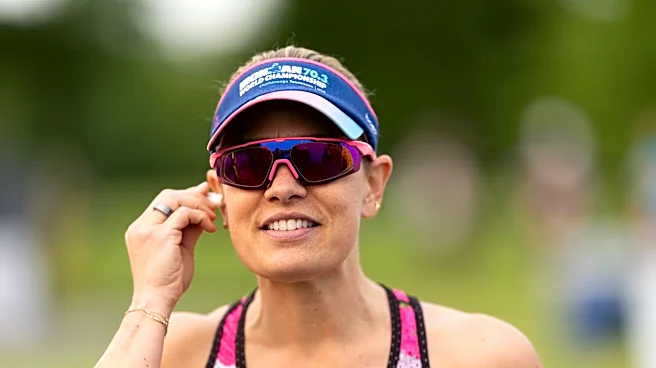
The East Tennessee State (ETS) women's triathlon team concluded its season by placing 10th at the Collegiate National Championships in Tempe, Arizona. The event, originally scheduled as a triathlon, was modified to a duathlon (run-bike-run format) due
to adverse weather and water quality conditions at Tempe Town Lake North Park. Head coach Allie Nicosia noted that the change negatively impacted the team's performance, stating that despite being prepared for various conditions, the day did not go as planned. Taylor Walker led the Buccaneers, finishing 51st with a time of 1:06:24, followed closely by Andie Psilopoulos in 52nd place at 1:06:27. Freshman Raphaela Lima, Mia Remorca, and Emily Jenkins also contributed to the team's overall standing.
Why It's Important?
This event highlights the significant impact that external factors, such as weather conditions and venue changes, can have on athletic competitions and team performance. For collegiate sports programs like ETSU's women's triathlon team, national championships represent the culmination of a season's training and effort. A format change, especially one as substantial as converting a triathlon to a duathlon, fundamentally alters the competitive landscape, potentially disadvantaging teams whose training and strategy are heavily geared towards the swim portion. This situation underscores the adaptability required in high-level collegiate athletics and the challenges coaches face in preparing athletes for unforeseen circumstances. The team's 10th-place finish, despite these challenges, reflects their resilience and competitive spirit within the collegiate sports arena.
What's Next?
Following their 10th-place finish at the Collegiate National Championships, the East Tennessee State women's triathlon team will now focus on the off-season and preparation for the next competitive year. Head coach Allie Nicosia has already expressed a forward-looking perspective, stating, 'We will come back stronger next year.' This indicates a period of evaluation, recruitment, and renewed training efforts to address areas for improvement and adapt to potential future challenges. The team will likely analyze their performance in the duathlon format and integrate lessons learned into their future training regimens. Athletes will continue individual training, and the coaching staff will work on strategic planning to enhance the team's competitiveness for the upcoming season.
Beyond the Headlines
The incident at the Collegiate National Championships, where a triathlon was converted to a duathlon due to environmental factors, raises broader questions about event planning, athlete safety, and fairness in sports. While ensuring athlete safety and responding to environmental conditions are paramount, such last-minute changes can significantly alter competitive outcomes and potentially undermine years of specialized training. This scenario could prompt discussions within collegiate athletic associations regarding contingency planning for major events, the criteria for format changes, and how to best mitigate their impact on participating teams. It also highlights the unique challenges faced by multi-disciplinary sports like triathlon, where performance is highly dependent on specific environmental conditions for each segment of the race.