

What's Happening?
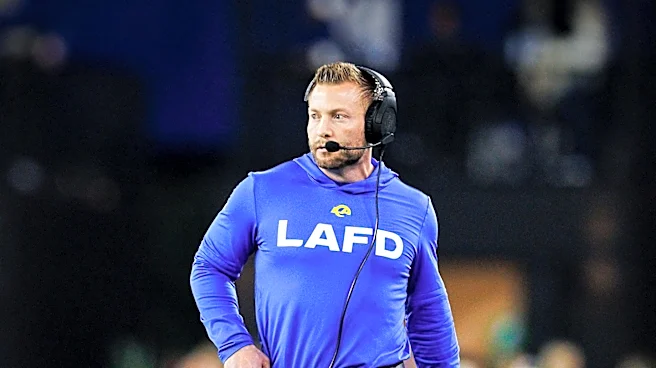
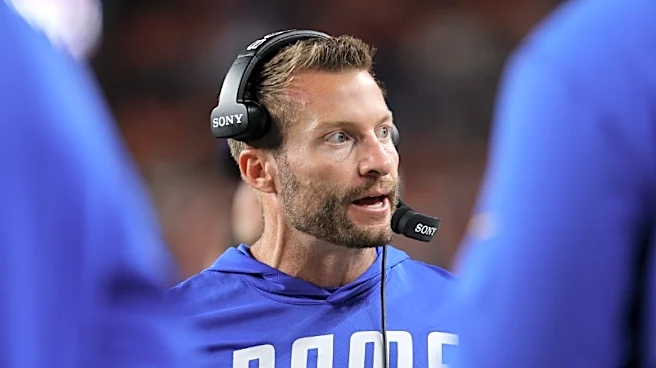
The NFL has reportedly issued a reminder to all teams regarding the confidentiality of conversations with officials, following an incident involving Los Angeles Rams head coach Sean McVay. McVay publicly disclosed that the league admitted officials made
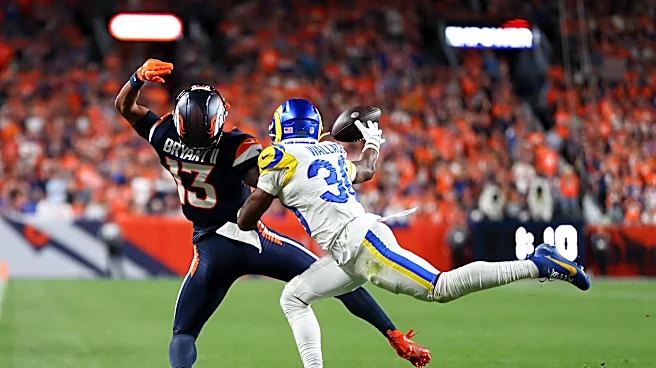
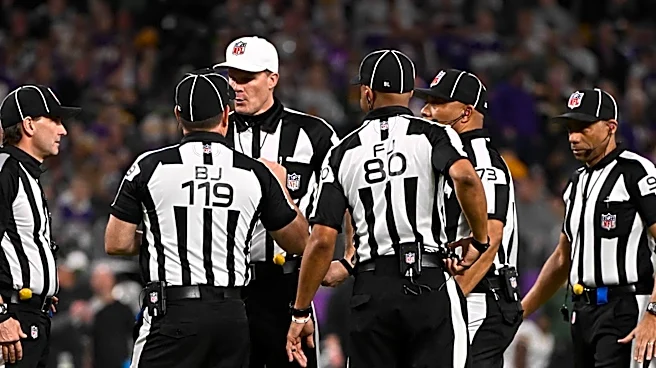
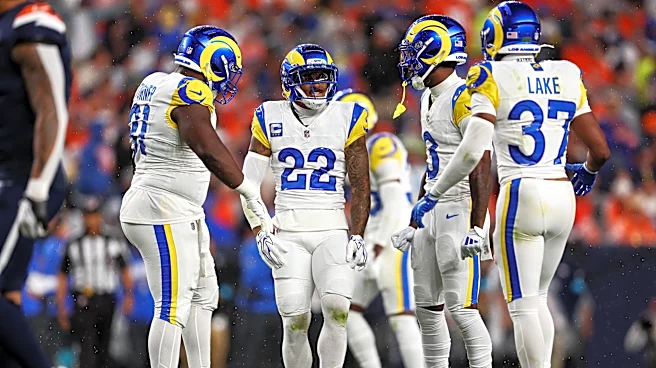
a significant error in a crucial late pass-interference penalty during the Rams' 30-26 loss to the Denver Broncos. The penalty, called against Rams cornerback Josh Wallace for interfering with Broncos wide receiver Pat Bryant, negated an interception and extended Denver's drive, leading to a game-winning touchdown with 47 seconds remaining. Replays indicated that Bryant had initiated contact by grabbing Wallace, not the other way around. McVay had requested clarification from the league on the play, a standard practice for coaches seeking to educate their players on officiating nuances. The NFL's subsequent memo emphasizes that such discussions are considered confidential and should not be shared publicly.
Why It's Important?
This incident highlights ongoing tensions between NFL teams and the league office regarding officiating transparency and communication protocols. The public acknowledgment of an officiating error, followed by a confidentiality reminder, underscores the league's efforts to manage its image and maintain control over sensitive information. For teams, the ability to openly discuss officiating feedback is crucial for player development and strategic adjustments. However, the NFL's stance suggests a priority on preventing public criticism that could undermine official authority or fuel controversy. This situation could lead to a more cautious approach from coaches when discussing officiating decisions, potentially impacting how teams address and learn from game-altering calls. The debate over reviewable calls, particularly pass interference, remains a significant point of contention, with the league having previously experimented with and then abandoned reviewability for such plays.
What's Next?
Following the NFL's reminder, coaches and team staff are expected to exercise greater discretion when discussing officiating decisions publicly. While teams can still request clarification from the league on calls, the public dissemination of such feedback is likely to be curtailed. The Rams, despite the acknowledged error, will not see the game's outcome changed and are focused on moving forward from their 1-2 start. The broader discussion around NFL officiating, particularly the reviewability of pass interference, may continue, but the league has shown reluctance to reintroduce such measures. Any potential rule changes would require proposals from teams and a vote, a process that the Rams attempted last year before withdrawing their proposal. The incident may prompt internal reviews within teams on how they handle communications regarding league feedback.
Beyond the Headlines
The NFL's move to reinforce confidentiality around officiating discussions touches upon the delicate balance between transparency and control in professional sports. While fans and teams often demand greater insight into officiating decisions, the league appears to prioritize maintaining a unified front and preventing public disputes that could erode trust in the game's integrity. This incident also reflects the broader challenge of human error in high-stakes environments and the difficulty of achieving perfect officiating. The ongoing debate about pass interference calls, and the perceived inconsistency in their application, points to a systemic issue that extends beyond individual game errors. The league's response, while aimed at controlling information, may inadvertently fuel speculation and frustration among those who believe greater transparency is needed to ensure fair play.