






What's Happening?
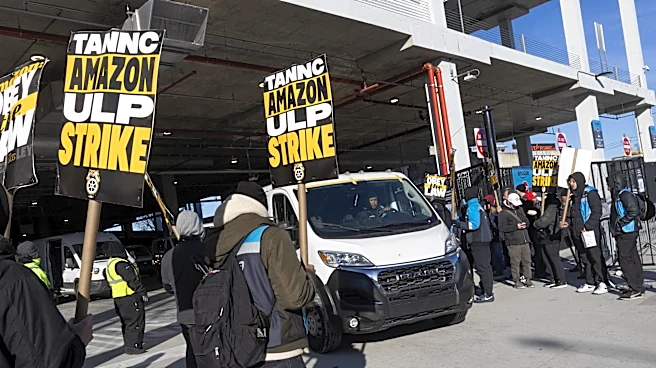
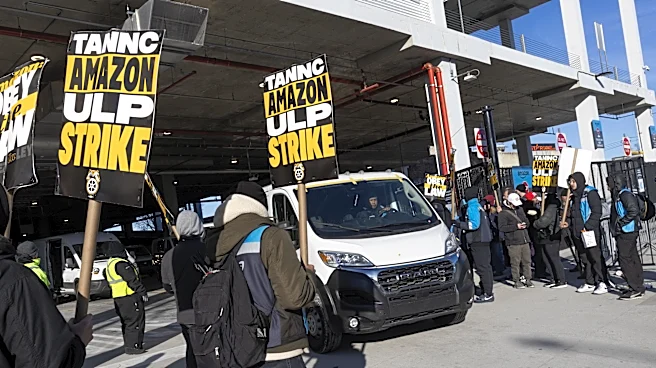
New York City lawmakers are in discussions to significantly modify a proposed bill that would mandate Amazon.com Inc. to directly hire thousands of its delivery workers. The original legislation aimed to reshape the delivery industry by requiring companies
like Amazon to bring subcontractor employees onto their direct payroll. However, the proposed revisions would offer Amazon a menu of options: directly employing workers, utilizing carriers such as UPS or the US Postal Service, or contracting with fully independent third-party operators. If Amazon chooses the third-party option, it would need to relinquish oversight of these contracted companies, including control over routes, daily delivery quotas, and hiring/firing decisions. This compromise comes after small business delivery partners, initially allied with Amazon against the bill, began advocating for their own protections from Amazon's requirements, arguing their dependence left them with little leverage.
Why It's Important?
This legislative overhaul represents a significant shift in the ongoing debate over gig economy worker rights and corporate accountability in New York City. The original bill sought to address concerns about outsourced workers enduring unsafe conditions while Amazon benefited from lower labor costs. The proposed compromise attempts to balance worker protections with the operational models of large companies and the viability of small businesses. If passed, it could set a precedent for how cities regulate last-mile delivery services, potentially influencing similar legislative efforts nationwide. For Amazon, it means avoiding a direct hire mandate that the company threatened would lead to pulling its logistics operations out of the city. For the approximately 40 Amazon delivery service partners in the city, it could mean greater autonomy but also significant changes to their operating models, impacting their business relationships with Amazon.
What's Next?
If an agreement is reached on the revised legislation, it could be brought to a vote within a few weeks. Discussions are ongoing between City Council members, the bill's sponsors, Amazon, and small business stakeholders. While the direct hire mandate may be removed, the revised bill would still require Amazon and other companies operating last-mile delivery facilities to be licensed by the city’s Department of Consumer and Worker Protection. This department would then be responsible for investigating complaints and ensuring safety standards are met. The outcome will determine the future structure of Amazon's delivery operations in New York City and the regulatory framework for the broader last-mile delivery industry.
Beyond the Headlines
This legislative negotiation highlights the complex interplay between labor rights, corporate power, and the economic realities of small businesses in the gig economy. The fracturing of the initial alliance between Amazon and its delivery partners underscores the often-strained relationships within subcontracting models, where smaller entities can feel exploited by larger corporations. The city's attempt to regulate these relationships, even through compromise, reflects a growing recognition of the need for oversight in rapidly evolving economic sectors. This situation could lead to broader discussions about defining 'independent contractor' versus 'employee' status and the responsibilities of platform companies towards their extended workforce, potentially influencing future labor laws and business practices beyond New York City.