
What's Happening?
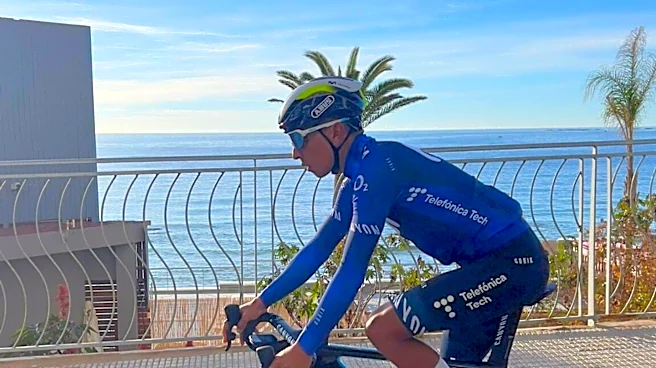
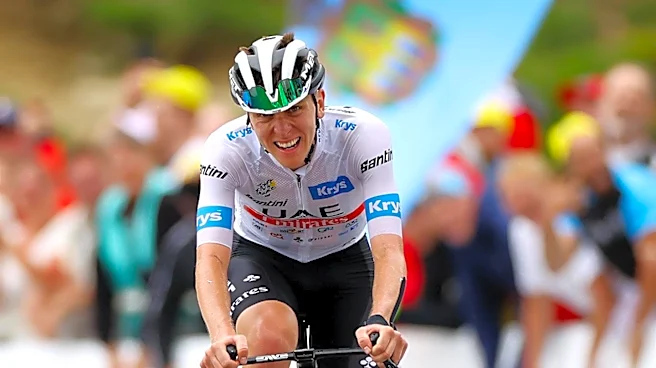
The Tour de France has encountered significant disruptions due to unruly fan behavior, leading to multiple crashes during the race. Einer Rubio, a cyclist from the Movistar team, was involved in a severe accident after colliding with a team car that had
to brake suddenly to avoid hitting a fan who had fallen onto the road. This incident occurred during a crucial stage in the French Alps, specifically at Alpe d'Huez. The driver of the UAE team car, Joxean Fernández Matxin, expressed regret over the incident, emphasizing the chaotic environment created by the fans. Rubio suffered multiple facial injuries and was taken to a hospital in Grenoble. The disorderly conduct of fans has prompted calls for increased safety measures, such as barriers and crowd control, to prevent further accidents.
Why It's Important?
The incidents at the Tour de France highlight the challenges of managing large crowds at major sporting events. The safety of athletes is paramount, and the chaotic behavior of fans poses significant risks not only to the competitors but also to the event's overall integrity. The crashes could have long-term implications for the race's organization, potentially leading to stricter regulations and security measures. This situation underscores the need for effective crowd management strategies to ensure the safety of both participants and spectators. The economic impact on teams and sponsors could also be significant if such incidents lead to withdrawals or injuries of key athletes.
What's Next?
In response to the recent events, race organizers may consider implementing stricter crowd control measures to enhance safety. This could include setting up barriers along critical sections of the race and limiting the number of spectators allowed in certain areas. Additionally, there may be discussions about the role of alcohol consumption in fan behavior and whether restrictions should be imposed. The cycling community and event organizers will likely engage in dialogue to address these issues and prevent future occurrences. The outcome of these discussions could influence how other major sporting events handle crowd management.