






What's Happening?
China's Commercial Aircraft Corporation of China (COMAC) has successfully conducted the first crewed intelligent test flight of its CE-25A electric aircraft in Binzhou, Shandong Province. This 10-ton, fully electric transport aircraft, designed for regional
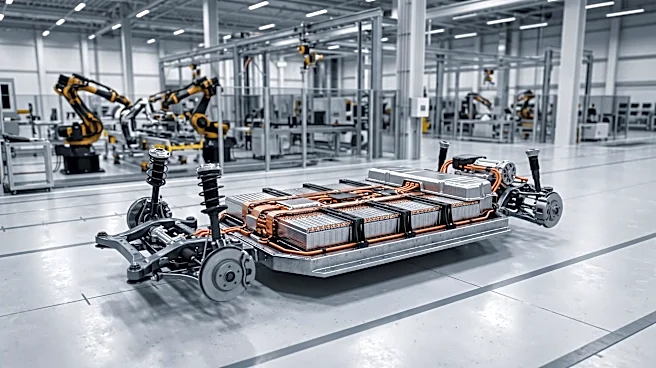
routes with a capacity of 19 passengers, marks a significant milestone in electric aviation. The test flight, which included two pilots and a test engineer, proceeded without incident, with all indicators meeting expectations. The energy for the CE-25A is supplied by CATL (Contemporary Amperex Technology), a leading Chinese battery manufacturer. This development follows 19 uncrewed test flights since February of this year.
Why It's Important?
The successful crewed test flight of the COMAC CE-25A, powered by CATL batteries, signifies a notable advancement in electric aviation, a sector with growing global interest, including in the U.S. While this is a Chinese initiative, it demonstrates the feasibility of larger electric aircraft for regional travel, potentially influencing the development timelines and investment strategies of U.S. aerospace companies like Boeing and startups in electric vertical takeoff and landing (eVTOL) and regional electric aircraft. The reliance on CATL for battery technology also highlights the critical role of battery innovation and supply chain security in the future of electric transportation, a challenge and opportunity for U.S. battery manufacturers and material suppliers. This progress could accelerate the adoption of electric propulsion in aviation, impacting fuel consumption, emissions, and airport infrastructure globally, including in the U.S.
What's Next?
The immediate next step for the CE-25A is to obtain certification for commercial operation, a process that COMAC has yet to fully outline. This certification will require demonstrating safe management of electrical propulsion risks, such as battery thermal runaway and high-voltage system failures, in addition to standard aviation hazards. The aircraft's operational success will also depend on the development of airport charging infrastructure and protocols. For the U.S. aviation industry, this means closely monitoring COMAC's certification process and technological advancements. It could also spur increased investment in electric aviation research, development, and regulatory frameworks to ensure U.S. competitiveness and safety standards in this emerging market. The long-term goal is to transition towards more sustainable air travel, and the CE-25A's journey will provide valuable insights.
Beyond the Headlines
The CE-25A's development highlights a broader global race in electric aviation, where the U.S. is a key player. The distributed electric propulsion system, with multiple ducted fans integrated into the wing, represents an innovative design approach that could offer advantages in lift and redundancy, but also introduces new safety and engineering challenges. The aircraft's current specifications, while modest compared to initial concepts, reflect the practical realities of bringing electric aviation to fruition. The need for robust battery technology, as supplied by CATL, underscores the strategic importance of battery innovation and manufacturing capacity. This also raises questions about international collaboration and competition in setting future aviation standards and ensuring a secure supply chain for critical components, impacting U.S. national security and economic interests.