



What's Happening?
The National Football League (NFL) has continued its policy of fining teams for altercations occurring during joint practices. In August 2024, the New York Giants and Detroit Lions were each fined $200,000 for fighting during their joint practice sessions.
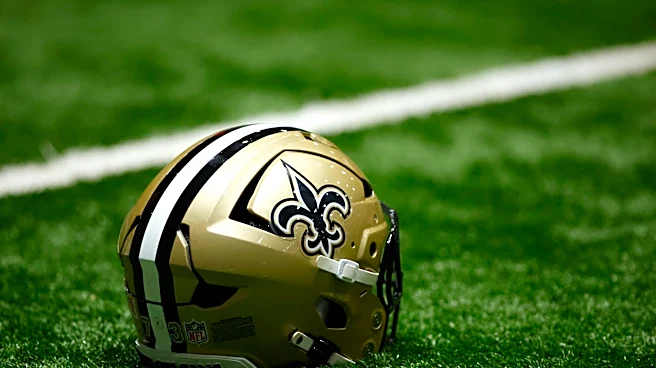
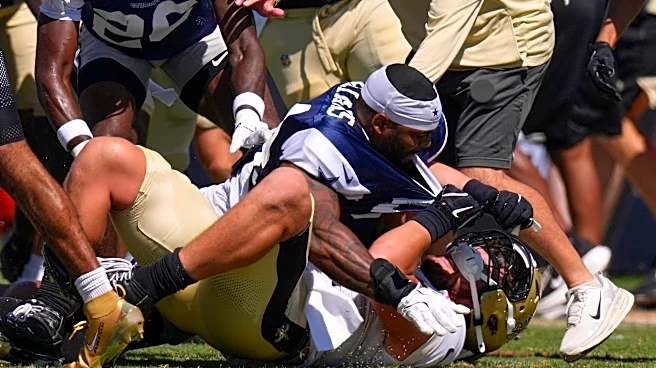
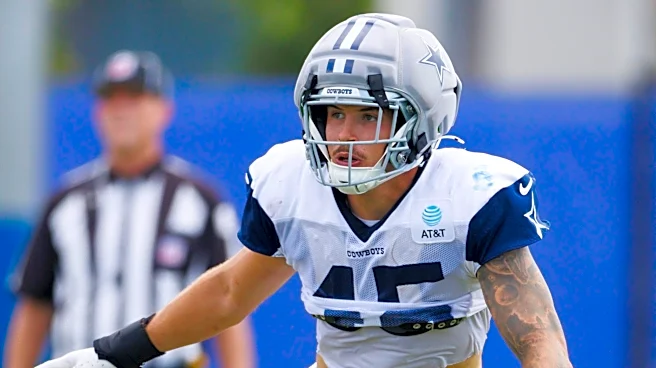
More recently, the fines for the New Orleans Saints and Dallas Cowboys escalated to $500,000 each for similar incidents. This marks the second consecutive year the league has issued such penalties. Notably, the fines are levied against the teams, not the individual players involved in the physical confrontations. The league's stance is that clubs are responsible for managing player conduct during all practice activities, including joint sessions. This approach contrasts with how the NFL handles in-game fights, where individual players typically face discipline.
Why It's Important?
The NFL's fining policy for joint practice fights highlights an ongoing challenge in maintaining player discipline and safety outside of official game settings. While the increased fines for the Saints and Cowboys suggest a more stringent approach by the league, the absence of direct player fines raises questions about the effectiveness of the current deterrents. The league's reliance on team accountability places the onus on franchises to control their players' behavior, potentially leading to internal disciplinary actions that are not publicly disclosed. This situation could impact team dynamics and coaching strategies as teams weigh the benefits of joint practices against the risk of substantial financial penalties and potential player injuries. The issue also touches upon the collective bargaining agreement (CBA) between the NFL and the NFL Players Association (NFLPA), as any direct league-imposed player fines for practice incidents might require negotiation and agreement from the NFLPA.
What's Next?
The NFL's continued fining of teams for joint practice altercations suggests that this policy will remain in effect, with potential for further escalation of penalties if incidents persist. Teams participating in joint practices will likely face increased pressure to implement stricter controls and preventative measures to avoid confrontations, given the significant financial implications. There may be ongoing discussions between the NFL and the NFLPA regarding player discipline for practice incidents, especially if the league seeks to impose direct fines on players, which could lead to changes in the collective bargaining agreement. The league's current approach indicates a preference for team-level accountability, but the effectiveness of this strategy in completely eliminating practice fights will be closely monitored.
Beyond the Headlines
The recurring issue of fights during NFL joint practices points to a deeper cultural aspect within professional football, where intense competition and physical aggression are inherent to the sport. While the league aims to curb these incidents, the underlying competitive drive among players, even in practice settings, often spills over. The distinction between fining teams versus players also raises ethical considerations about individual responsibility versus organizational accountability. If the league believes these fights pose a significant risk to player safety, the current policy might be seen as insufficient, potentially leading to calls for more direct player-level consequences. This situation also underscores the complex relationship between the league and the players' union, where player rights and disciplinary measures are often subjects of contentious negotiation, impacting how such incidents are addressed.