




What's Happening?
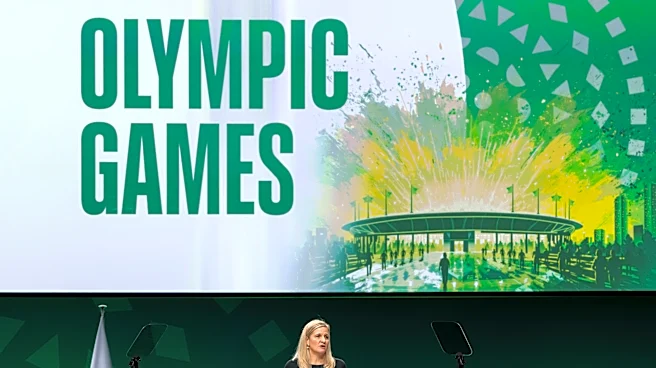
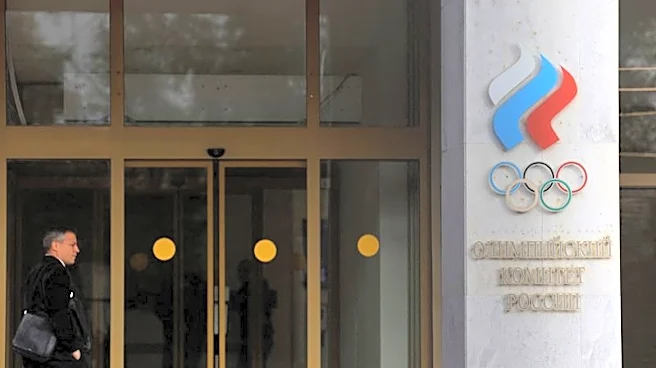
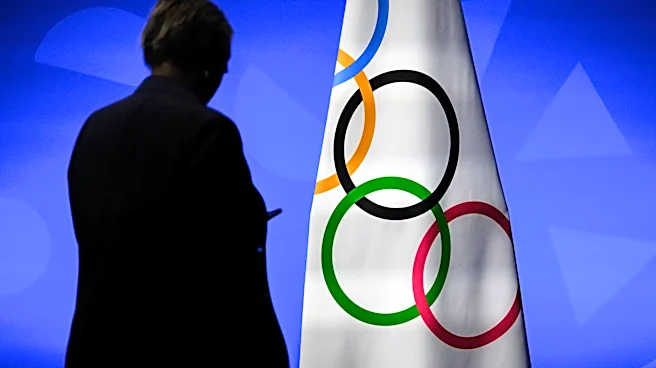
The International Olympic Committee (IOC) has lifted its suspension on the Russian Olympic Committee, allowing Russian athletes to compete in the 2028 Los Angeles Olympics. This decision follows the IOC's acceptance that the Russian Olympic Committee no
longer controls sporting bodies in Russian-occupied parts of Ukraine. The IOC emphasized that athletes should not be punished for their government's actions, although Russian athletes will still need to undergo multiple doping tests due to past doping scandals. The decision has been met with mixed reactions, with some organizations criticizing the IOC for lowering its standards for accountability. The IOC has not yet decided on the use of Russia's national symbols at the Games, and individual sports federations will have the discretion to make their own decisions regarding Russian participation.
Why It's Important?
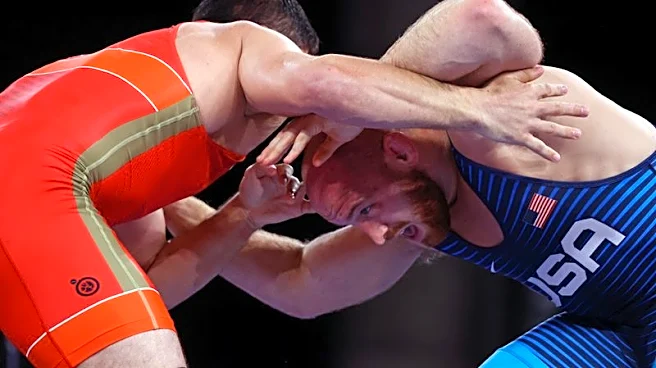
The reinstatement of the Russian Olympic Committee is a pivotal moment in international sports, as it allows Russian athletes to return to the Olympic stage after years of restrictions. This decision could have significant implications for the competitive landscape of the 2028 Olympics, as Russian athletes are known for their strong performances. The move also raises questions about the IOC's stance on doping and geopolitical issues, as it seeks to balance the integrity of sports with the principle of not holding athletes accountable for their governments' actions. The decision may influence other international sports organizations and their policies on athlete participation amid ongoing geopolitical tensions.
What's Next?
The IOC will continue to monitor the compliance of the Russian Olympic Committee with anti-doping regulations. The organization has yet to finalize decisions regarding the display of Russia's national symbols at the 2028 Games. Individual sports federations will have the authority to determine the participation of Russian athletes in their events, which could lead to diverse responses across different sports. The IOC's decision may prompt further discussions and reactions from other countries and international sports bodies, potentially shaping future policies on athlete participation in the context of geopolitical conflicts.