





What's Happening?
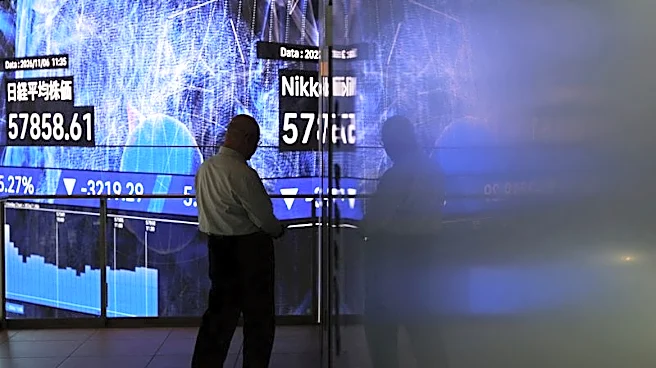
UBS Global Wealth Management's Chief Investment Officer, Mark Haefele, views the recent sharp decline in U.S. technology, semiconductor, and AI-related stocks as a 'positioning reset' rather than a lasting downturn in the AI investment cycle. This selloff,
which saw the S&P 500 fall 4.4% and the Nasdaq 5.5%, was driven by concerns that potential Democratic gains in the U.S. midterm elections could lead to increased regulation of AI and tighter restrictions on data center development. Despite this volatility, Haefele anticipates an upside in broad equity indices over the next six to twelve months. He advises investors to manage concentration risks, rebalance excessive technology exposure, and build a strong multi-asset core portfolio. Other wealth managers, including Enrico Chinello of Julius Baer and Daniel Nilsson of Isio, share a similar long-term constructive view on equities, emphasizing diversification and resilient corporate earnings.
Why It's Important?
The stance taken by UBS Global Wealth Management and other leading financial institutions is crucial for U.S. investors, as it provides guidance amidst significant market volatility. The emphasis on diversification and managing concentration risks directly addresses a key vulnerability in many portfolios heavily weighted towards U.S. mega-cap technology stocks. This perspective suggests that while the AI investment cycle remains intact, the market may be entering a phase where broader economic fundamentals and diversified asset classes will play a more significant role in driving returns. For U.S. industries, particularly technology and AI, this implies that while long-term growth is expected, regulatory and political developments could introduce short-term headwinds, necessitating a more cautious and diversified investment approach. The potential for state-level regulations on data centers, as noted by Enrico Chinello, could also impact infrastructure development and investment in specific U.S. regions.
What's Next?
Wealth managers anticipate continued market indigestion following election results, but do not foresee a prolonged downturn based on fundamentals. Investors are advised to remain invested and maintain diversification, while being flexible to respond to changing market conditions. The focus will be on identifying opportunities beyond U.S. mega-cap technology, with global small caps and emerging markets offering exposure to different regions and drivers of return. The bond market's signal of easing financial conditions and slower but sustainable economic growth suggests that the overall investment outlook remains positive, albeit with a need for strategic adjustments. The recent correction is viewed by some as an opportunity to add exposure to quality companies with intact fundamentals at more attractive valuations, indicating a potential shift in investment strategies towards broader market segments.
Beyond the Headlines
The market's reaction to potential political shifts regarding AI regulation highlights the increasing intersection of technology, policy, and investment. This dynamic underscores a growing need for investors to integrate political risk analysis into their investment frameworks, especially in rapidly evolving sectors like artificial intelligence. The call for diversification also reflects a deeper concern about market concentration, which, if left unaddressed, could pose systemic risks. The debate over AI's national strategic importance versus state-level regulatory hurdles points to a complex regulatory landscape that could shape the future of technological innovation and infrastructure development in the U.S. This situation also implicitly encourages a re-evaluation of what constitutes a 'safe' or 'growth' investment, pushing investors to consider a wider array of factors beyond just technological advancement.