









What's Happening?
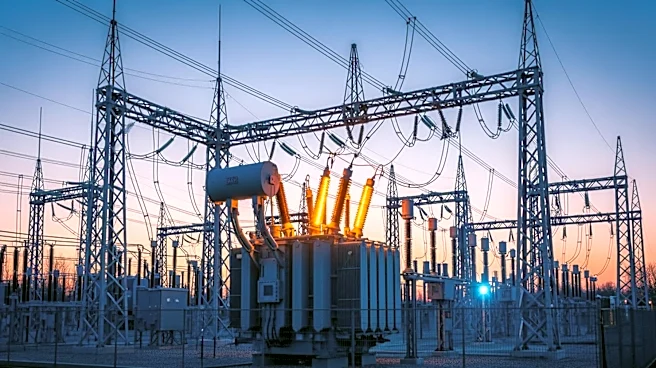
Federal regulators have directed regional grid operators to expedite the connection of large energy users, such as AI data centers, to the U.S. electric transmission system. This decision, announced by the Federal Energy Regulatory Commission (FERC),
aims to address the increasing demand for electricity driven by the growth of artificial intelligence technologies. Energy Secretary Chris Wright advocated for this move to enhance the U.S.'s competitive edge against China in the AI sector. The order allows states to maintain control over retail electric rates and conditions, while ensuring that AI data centers can connect to the grid efficiently. The decision comes amid concerns about the environmental impact of data centers, including their energy and water consumption, and potential noise and pollution issues.
Why It's Important?
The FERC's decision is significant as it addresses the critical need for infrastructure to support the burgeoning AI industry, which is expected to drive substantial economic growth. By facilitating faster connections to the power grid, the U.S. aims to attract more investment in AI technologies, thereby maintaining its technological and economic leadership. However, this move also raises concerns about the environmental impact and the potential strain on existing power resources. The decision balances the need for rapid technological advancement with the responsibility to manage environmental and community impacts, ensuring that the growth of AI infrastructure does not come at the expense of sustainability and public welfare.
What's Next?
Following the FERC's directive, regional grid operators are required to outline their plans for ensuring adequate power supply to new and future data centers within 30 days. They must also develop strategies to integrate large power users according to the new guidelines within 60 days. This initiative may prompt states to establish rules to accommodate large power users and prevent cost shifts to residential and business customers. The FERC's actions could lead to broader jurisdiction over interconnection issues if states do not act swiftly. The ongoing expansion of data centers will likely continue to face challenges such as permitting delays and local opposition, necessitating further regulatory and community engagement.