



What's Happening?
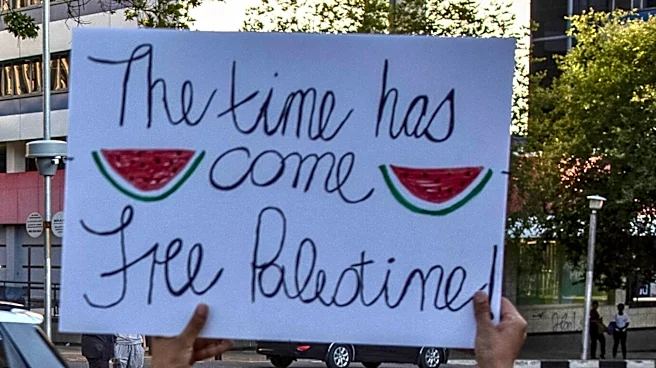
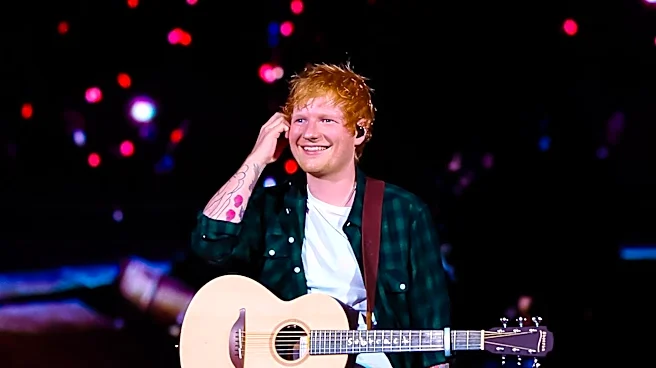
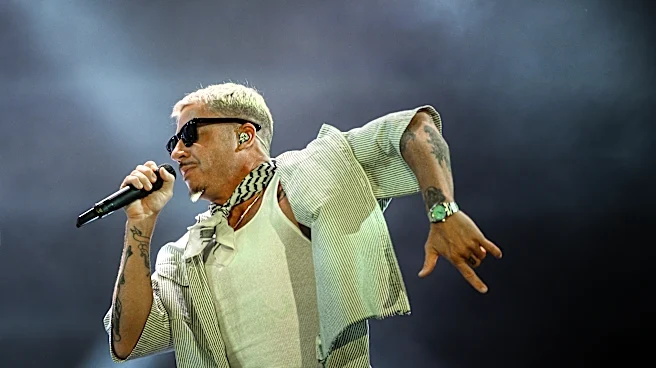
During an opening performance for Ed Sheeran's Loop Tour at MetLife Stadium, Grammy-winning artist Macklemore made an onstage plea for 'Free Palestine' and performed his protest song 'Hind's Hall.' This action led the Israeli-American Council to initiate
a petition urging Ed Sheeran to remove Macklemore from the remainder of the tour. The petition argues that a global concert platform should not be used to advance a 'one-sided political agenda' and questions whether Macklemore's political speech and visual content were pre-approved. Macklemore, wearing a keffiyeh, addressed the audience of 80,000, stating his desire for people in Gaza and the West Bank to know they are not forgotten. He emphasized that every human being deserves safety and peace, and that his fear of speaking out would mean he no longer belongs on stage. He also extended his call for freedom to America, Cuba, Congo, Sudan, Iran, and those living in fear due to ICE.
Why It's Important?
This incident highlights the increasing intersection of celebrity platforms and geopolitical issues, particularly the Israeli-Palestinian conflict, within the U.S. entertainment landscape. The petition by the Israeli-American Council underscores a growing tension between artistic expression and audience expectations at commercial events. It raises questions about the responsibilities of artists and tour organizers regarding political messaging during performances. For the music industry, such events can lead to public relations challenges, potential boycotts, and debates over freedom of speech versus the commercial neutrality of concerts. The involvement of a prominent artist like Macklemore, known for his protest songs, amplifies the visibility of the Palestinian cause, potentially influencing public opinion and further polarizing audiences. This situation also reflects broader societal discussions in the U.S. about how public figures should use their influence to address sensitive global conflicts.
What's Next?
The immediate next step will likely involve a response from Ed Sheeran's tour management or Sheeran himself regarding the petition and Macklemore's continued participation in the tour. The Israeli-American Council's petition aims to pressure tour leadership to clarify their stance on political messaging during performances and to establish clear boundaries. Depending on the response, there could be further public statements from Macklemore, the Israeli-American Council, or other advocacy groups. The incident may also prompt discussions among concert promoters and artists about contractual clauses related to political content. Future tour dates could see increased scrutiny or protests from either side of the issue, potentially impacting ticket sales or the overall atmosphere of the concerts. This event could also set a precedent for how similar situations are handled in the future within the U.S. entertainment industry.
Beyond the Headlines
Beyond the immediate tour implications, this event touches upon deeper ethical and cultural dimensions concerning the role of artists as social and political commentators. Macklemore's decision to use his platform for a 'Free Palestine' message, despite potential backlash, reflects a growing trend of artists engaging with global human rights issues. This can be seen as a form of 'artivism,' where art is used as a tool for activism. The controversy also highlights the challenges faced by artists who choose to take a stance on divisive issues, potentially alienating segments of their audience or facing professional repercussions. It prompts a broader societal conversation about the boundaries of free expression in commercial spaces and the expectations placed on public figures to either remain neutral or advocate for causes. This incident could contribute to a long-term shift in how political discourse is integrated into mainstream entertainment events in the U.S., potentially leading to more explicit guidelines or, conversely, more emboldened artistic activism.