
What's Happening?
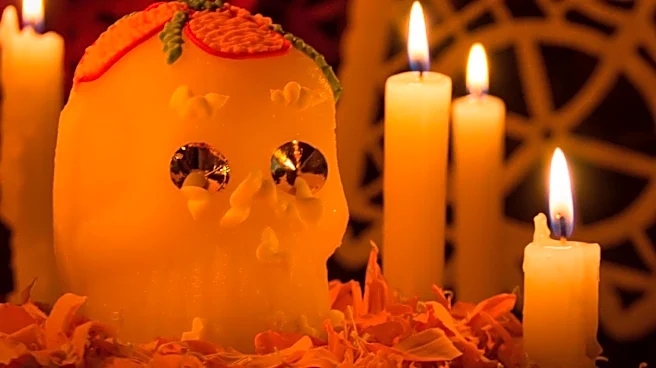
San Andrés Mixquic, a historic village on the outskirts of Mexico City, is experiencing an overwhelming influx of tourists during its traditional Day of the Dead celebrations. The cemetery, central to the festivities,
becomes so crowded that locals, like Martha Nashieli, have been prevented from entering to visit family graves. In 2025, approximately 100,000 visitors descended upon the cemetery between October 31 and November 2, a number seven times the village's population. This surge in tourism, while bringing global attention to the tradition, risks transforming an intimate family mourning ritual into a public spectacle, with tourists often using flash photography and speaking loudly, despite official recommendations to ask permission and avoid flashes.
Why It's Important?
The tension between preserving cultural authenticity and accommodating mass tourism is a growing concern for communities worldwide, and this situation in San Andrés Mixquic highlights the challenges. For the U.S., this issue resonates with discussions around cultural appropriation and the impact of tourism on indigenous and local traditions. The commercialization of sacred events can dilute their meaning and create resentment among local populations. Economically, while tourism brings revenue, uncontrolled growth can strain local infrastructure, displace residents, and erode the very cultural fabric that attracts visitors. This scenario prompts a broader conversation about sustainable tourism practices and the ethical responsibilities of travelers and tourism operators.
What's Next?
Mexico City Mayor Clara Brugada has acknowledged the cemetery's lack of space for burials and pledged to find a solution, though this initiative does not explicitly address tourism. Experts like Driselda Sánchez-Aguirre from UNAM suggest that current recommendations for tourist behavior are insufficient. She proposes implementing clear instructions for visitors before they enter the cemetery, emphasizing that it is a sacred space, not a spectacle. Future measures might include stricter crowd control, designated viewing areas, or educational campaigns aimed at fostering respectful engagement. The community of San Andrés Mixquic will likely continue to seek ways to share their tradition while maintaining its intimacy and sacredness.
Beyond the Headlines
The situation in San Andrés Mixquic delves into the complex interplay between cultural heritage, economic development, and community identity. The Day of the Dead, a profound celebration of life and death, is a cornerstone of Mexican culture. When such a deeply personal and spiritual event becomes a tourist attraction, it raises questions about the commodification of culture and the potential loss of intangible heritage. The challenge lies in finding a balance where cultural exchange can occur respectfully, without turning sacred rituals into performances. This issue is a microcosm of a global phenomenon where unique cultural practices are increasingly exposed to and impacted by the forces of globalization and mass tourism, necessitating thoughtful approaches to preservation and engagement.