


What's Happening?
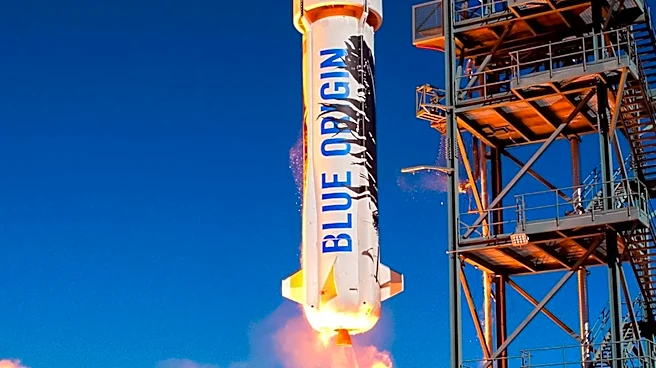
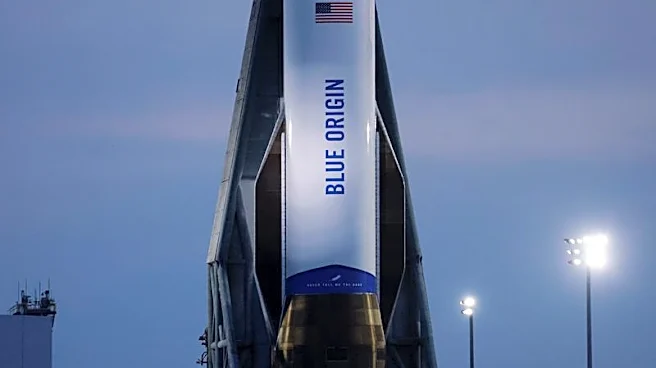
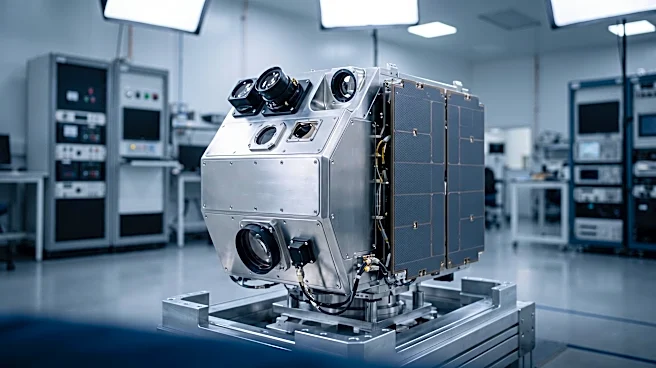
Danish satellite manufacturer GomSpace has secured an €8 million contract to continue developing two spacecraft for Blue Origin’s lunar resource prospecting mission. This agreement marks the second phase of the project, bringing the total value to €10.9
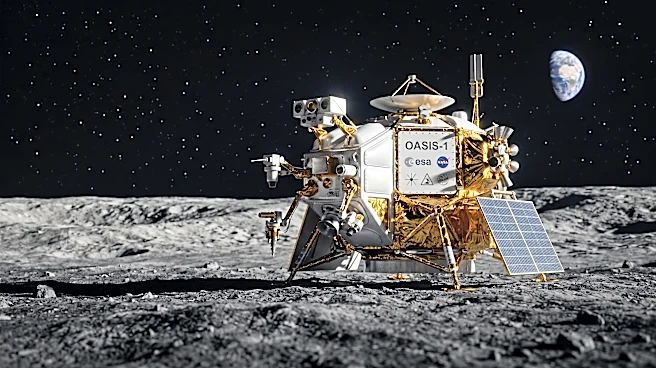
million, following an initial €2.9 million contract for preliminary design. While GomSpace did not explicitly name Blue Origin in its announcement, referring to it as a 'leading North American space company,' GomSpace CEO Carsten Drachmann had previously confirmed their involvement in a mission for Blue Origin involving two satellites orbiting the Moon. The mission, known as Oasis-1 under Blue Origin's broader Project Oasis initiative, aims to map lunar resources, including water ice, helium-3, rare earth elements, and precious metals. The spacecraft are expected to be delivered in late 2027, with key milestones including a critical design review and the integration of scientific payloads in the United States.
Why It's Important?
This contract is significant for the burgeoning lunar economy and the future of space exploration. By identifying and assessing lunar resources, Blue Origin's Oasis-1 mission could pave the way for sustainable human presence on the Moon, reducing reliance on Earth-based supplies. The ability to extract resources like water ice for fuel and life support, or rare earth elements for manufacturing, would dramatically lower the cost and complexity of lunar operations. For GomSpace, this substantial contract solidifies its position as a key player in the space industry, particularly in the development of specialized spacecraft for complex missions. The collaboration highlights the international nature of space endeavors, with a European company contributing critical technology to a major U.S. space initiative, fostering technological exchange and economic growth in the space sector.
What's Next?
GomSpace will proceed with the second phase of development for the two spacecraft, focusing on achieving operational capability. This phase will include critical design reviews and the integration of scientific payloads, which will take place in the United States. The delivery of the spacecraft to Blue Origin is anticipated in late 2027. Following delivery, the focus will shift to the launch and deployment of the Oasis-1 mission, which will then commence its lunar resource prospecting activities. The data collected from this mission will be crucial for Blue Origin's Project Oasis initiative, informing future decisions regarding lunar exploration, resource extraction, and the establishment of a sustained human presence on the Moon.
Beyond the Headlines
The pursuit of lunar resources raises complex questions about property rights in space and the potential for international disputes over valuable extraterrestrial materials. As more nations and private companies eye the Moon for its resources, the need for clear international agreements and regulatory frameworks will become paramount. The success of missions like Oasis-1 could also accelerate the development of in-situ resource utilization (ISRU) technologies, which are essential for long-duration space missions and colonization efforts. Furthermore, the economic implications are vast; the ability to mine and utilize lunar resources could create entirely new industries and supply chains, fundamentally altering the global economy and humanity's relationship with space. This mission represents a foundational step towards a future where the Moon is not just a scientific outpost but a potential hub for resource extraction and industrial activity.