
What's Happening?
Recent European film scores, including Zacarías M. de la Riva's 'Tad and the Magic Lamp' and Diego Navarro's 'Winnipeg, el Barco de la Esperanza,' demonstrate a clear influence from legendary composer
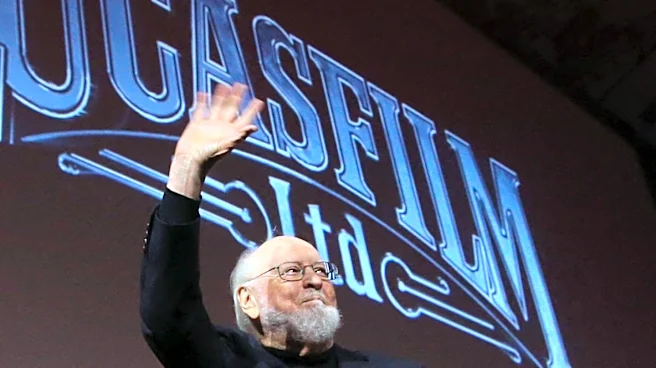
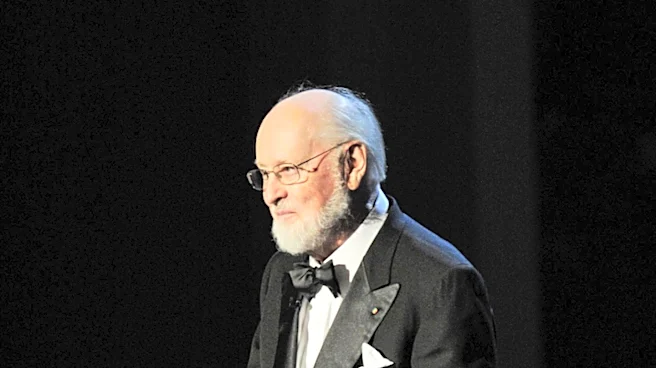
John Williams. De la Riva's work on 'Tad and the Magic Lamp' is noted for its exhilarating action music, which openly indulges an affection for composers like Williams and Alan Silvestri. Specific cues such as 'Inside the Big Ben' and 'Desert Chase' are highlighted as examples of energetic orchestral adventure writing reminiscent of these influences. Similarly, Navarro's score for 'Winnipeg, el Barco de la Esperanza,' an Argentinian animated historical drama, features intimate expressions of character relationships with music that sometimes resembles classic John Williams, particularly in its use of chimes and soft vocals. This trend indicates a continued reverence for Williams's symphonic style within contemporary film scoring.
Why It's Important?
The continued influence of John Williams on contemporary film composers, particularly in European cinema, underscores his enduring legacy and the universal appeal of his musical language. This trend is important because it demonstrates how established masters shape the next generation of artists, ensuring that certain stylistic traditions and orchestral approaches persist. For the film industry, it means that audiences can continue to expect scores that evoke a sense of grandeur, adventure, and emotional depth, qualities often associated with Williams's work. This influence also highlights the global nature of film music, where a U.S.-based composer's techniques are adopted and reinterpreted across different cultural contexts, enriching the overall soundscape of international cinema. It also suggests that the demand for richly thematic and symphonic scores remains strong, even as film music evolves.
What's Next?
The ongoing appreciation for John Williams's style suggests that future film scores, both in Europe and potentially in the U.S., will likely continue to draw from his established techniques. This could lead to a resurgence of classically-inspired orchestral scores in various genres, as composers seek to evoke similar emotional responses and narrative power. We may see more composers openly acknowledging Williams as a primary influence, potentially leading to a broader discussion within the film music community about the balance between homage and innovation. Additionally, this trend might encourage film producers and directors to invest in more traditional orchestral scoring, recognizing its proven ability to enhance storytelling and audience engagement. The continued success of films with such scores could further solidify Williams's place as a foundational figure in film music education and practice.
Beyond the Headlines
Beyond the immediate influence on specific film scores, the enduring presence of John Williams's style points to a deeper cultural phenomenon: the timeless appeal of certain musical archetypes. His ability to craft memorable melodies and orchestrate them with profound emotional impact has created a blueprint for cinematic storytelling through music. This goes beyond mere imitation; it reflects a shared understanding of how music can elevate narrative and connect with universal human experiences. The adoption of his techniques by diverse composers in different countries also highlights the global language of music, transcending national boundaries and cultural specificities. It suggests that certain forms of musical expression, particularly those that evoke heroism, wonder, and pathos, have a universal resonance that continues to inspire and move audiences worldwide, solidifying Williams's status as a global icon in the arts.