






What's Happening?
Alphabet's strategic outlook for 2026 and beyond centers on its ability to monetize its significant investments in artificial intelligence (AI) while managing a surge in capital spending. The company's strategy leverages a vertically integrated AI stack,
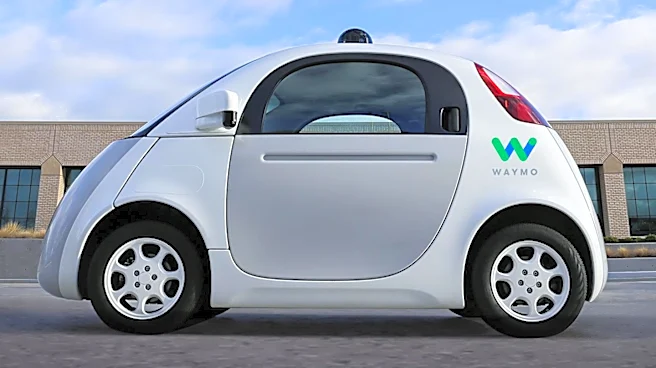
encompassing custom TPU chips, the Gemini model family, and Google Cloud, which analysts view as a cost-advantaged position. Key catalysts include the integration of advertising into AI Overviews and Gemini conversations, the scaling of Gemini 3 and newer models across Search and Cloud, and the commercial ramp-up of the $32 billion Wiz cloud-security acquisition. Google Cloud has become a significant profit contributor, and the 'Other Bets' portfolio, particularly Waymo, is transitioning towards measurable revenue. However, intensifying competition from Microsoft and OpenAI, along with the burden of heavy infrastructure spending, pose challenges.
Why It's Important?
Alphabet's AI strategy is critical for its future growth and market leadership in the U.S. and globally. The successful monetization of AI initiatives will determine whether the company can sustain profitability despite escalating infrastructure commitments. The integration of AI into core products like Search and advertising could redefine user experience and create new revenue streams, potentially offsetting any disruption to traditional search advertising. The performance of Google Cloud and the 'Other Bets' portfolio is vital for diversifying Alphabet's revenue beyond advertising, making the company more resilient to market fluctuations. The outcome of this strategy will significantly impact the competitive landscape of the tech industry, influencing innovation, investment, and market share among major players in AI and cloud computing.
What's Next?
Looking into 2026, Alphabet will focus on expanding Cloud's revenue share, transitioning Waymo into a meaningful financial contributor, and rolling out AI subscriptions across Workspace and consumer products. The company's cost structure evolution, particularly TPU-led efficiency gains and cloud margin expansion, will be closely watched to determine if profitability can be sustained amidst rising capital expenditures. Regulatory decisions in the U.S. and European Union, especially concerning antitrust and data privacy, will remain significant swing factors. Alphabet's capital allocation priorities, including buybacks, the Wiz integration, and continued infrastructure investment, will also be under scrutiny by investors. The company will continue to scale Gemini models and integrate AI into its various platforms to drive monetization.
Beyond the Headlines
Alphabet's aggressive AI strategy highlights a broader industry trend where technology giants are making massive, long-term bets on artificial intelligence as the next frontier of innovation. The company's vertical integration from hardware (TPUs) to models (Gemini) and services (Google Cloud) reflects a strategy to control the entire AI value chain, aiming for efficiency and competitive advantage. This approach also raises ethical and societal questions regarding the pervasive integration of AI into daily life, data privacy, and the potential for AI to reshape industries and employment. The escalating capital expenditure for AI infrastructure also points to the immense resources required to compete at the forefront of this technological revolution, potentially widening the gap between leading tech firms and smaller players. The balance between innovation, monetization, and responsible AI development will be a critical challenge for Alphabet and the industry as a whole.