







What's Happening?
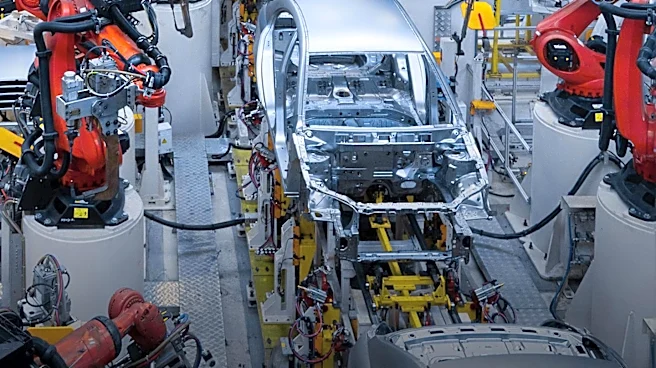
Volvo Car Torslanda, JLR, and Dassault Systèmes are advancing smart factory technologies to achieve net zero emissions in automotive manufacturing. Volvo's Torslanda plant has undergone a significant transformation, introducing megacasting and in-house
battery pack assembly. This allows for the production of the new electric EX60 alongside the existing XC60 without production delays. The European Battery Regulation, requiring digital passports for batteries by 2027, has prompted Volvo to implement traceability systems early. Dassault Systèmes is leveraging simulation to streamline vehicle development, while JLR focuses on energy monitoring to improve plant efficiency.
Why It's Important?
These advancements highlight the automotive industry's shift towards sustainable manufacturing practices. By integrating smart technologies, companies like Volvo and JLR are not only reducing their carbon footprint but also enhancing production efficiency. The use of digital passports for batteries ensures transparency and accountability in the supply chain, which is crucial for meeting regulatory requirements and consumer expectations. These efforts are part of a broader industry trend towards sustainability, which could lead to significant environmental benefits and set new standards for automotive manufacturing.
What's Next?
As these companies continue to innovate, the automotive industry may see further integration of smart technologies to meet sustainability goals. The success of these initiatives could encourage other manufacturers to adopt similar practices, potentially leading to industry-wide changes. Additionally, ongoing regulatory developments, such as the European Battery Regulation, will likely drive further advancements in traceability and sustainability in the automotive sector.