




What's Happening?
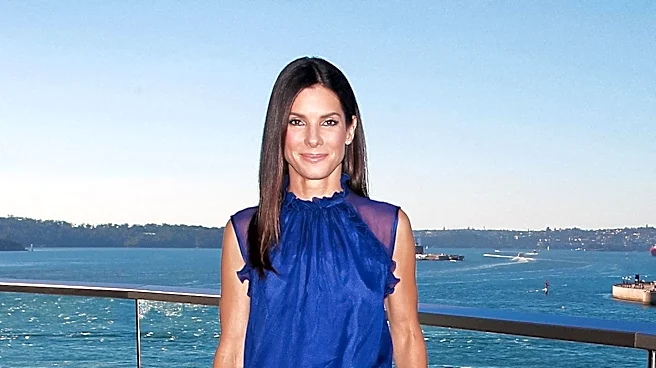
Actress Sandra Bullock has publicly discussed for the first time the private battle her partner, Bryan Randall, waged against Amyotrophic Lateral Sclerosis (ALS) for three years before his death on August 5, 2023, at age 57. Appearing on the 'SmartLess'
podcast, Bullock revealed that Randall chose to keep his illness private, a decision she honored, leading to her own isolation during his struggle. Only her sister, Gesine Bullock-Prado, was aware of Randall's condition. Bullock described the period, which coincided with raising her two children, Louis (16) and Laila (12), during the COVID-19 pandemic, as a 'trifecta that was pretty dark.' She admitted to grieving Randall four years before his passing, recognizing a shift in his journey both physically and mentally, and feeling that her 'person left a lot earlier than the body left.'
Why It's Important?
Sandra Bullock's revelation sheds light on the profound personal toll that chronic and terminal illnesses can take on families, particularly when the decision is made to maintain privacy. Randall's choice to keep his ALS battle secret, while understandable, inadvertently led to Bullock's isolation, highlighting the immense emotional and practical burdens carried by caregivers in such situations. This story underscores the often-unseen struggles behind public figures' lives and the complex dynamics of grief, which can begin long before a physical death. It also brings attention to ALS, a devastating neurological disease, and the challenges faced by patients and their loved ones. The narrative emphasizes the importance of support systems, even for those who appear to have it all, and the quiet strength required to navigate personal tragedies away from the public eye.
What's Next?
While Bullock has now shared her experience, it is unlikely that she will delve into further extensive public discussions about Randall's illness or their private life, given her respect for his wish for privacy. Her decision to speak out now, three years after his death, suggests a period of personal processing and healing. The interview may, however, encourage more open conversations about ALS and the importance of supporting caregivers. It could also inspire other public figures to share their experiences with private struggles, potentially destigmatizing illness and grief. For Bullock, the focus will likely remain on her children and her career, with her public appearances continuing to be carefully managed to protect her family's privacy.
Beyond the Headlines
This story delves into the deeper implications of privacy in the digital age, especially for public figures. Bryan Randall's deliberate choice to keep his illness private, and Sandra Bullock's unwavering commitment to honoring that wish, highlights a powerful assertion of personal autonomy in an era where celebrity lives are often intensely scrutinized. It raises ethical questions about the boundaries of public interest and the right to a private life, even for those in the public eye. Furthermore, Bullock's description of grieving Randall before his physical passing offers a poignant insight into anticipatory grief, a complex emotional process often experienced by those caring for individuals with terminal illnesses. This narrative serves as a reminder that behind the glamour of Hollywood, there are profound human experiences of love, loss, and resilience that resonate universally.