







What's Happening?
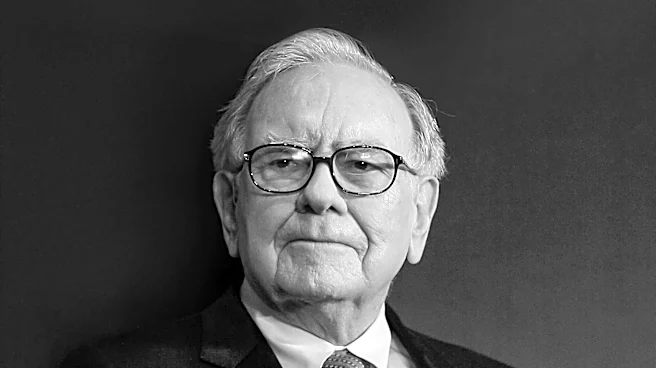
Warren Buffett outlined a specific investment strategy for his wife's inheritance, recommending a portfolio allocation of 90% in a low-cost S&P 500 index fund and 10% in short-term government bonds. This instruction, first shared in his 2013 shareholder
letter and reiterated at Berkshire's 2021 annual meeting, emphasizes simplicity and long-term growth. An analysis of this 90/10 mix from 2000 to November 2026 shows that a $100,000 stake would have grown to approximately $727,000, yielding about 7.67% annually. While a pure S&P 500 index fund would have performed slightly better in total return over the same period, reaching around $819,000 (8.15% annually), the 90/10 mix demonstrated greater resilience during market downturns. For instance, in 2008, the mix lost 33.2% compared to the S&P 500's 37% loss, and similar patterns were observed in other down years.
Why It's Important?
This investment strategy, coming from one of the most respected investors, offers a practical and accessible model for long-term wealth management, particularly for individuals seeking a balance between growth and capital preservation. For U.S. investors, it underscores the power of low-cost index funds and the S&P 500 as a core component of a diversified portfolio. The inclusion of a small percentage of bonds highlights their role in mitigating losses during market volatility, providing a cushion that can be crucial for those drawing income from their investments. This approach challenges the notion that complex, actively managed portfolios are always superior, advocating instead for a straightforward, disciplined strategy that has historically outperformed many professional managers. It provides a valuable lesson for individual investors on how to navigate market cycles with a focus on long-term objectives.
What's Next?
The enduring relevance of Buffett's advice suggests that this 90/10 allocation will continue to be a benchmark for conservative yet growth-oriented investment strategies. As market conditions evolve, the performance of this mix will likely be continually re-evaluated, providing ongoing insights into the effectiveness of simple, diversified portfolios. Investors may increasingly adopt similar strategies, especially those nearing retirement or seeking to preserve capital while still participating in market growth. The emphasis on low-cost index funds also points to a continued trend towards passive investing, which could further influence the asset management industry by driving down fees and increasing transparency. The strategy's resilience during downturns will remain a key selling point, particularly in periods of economic uncertainty.
Beyond the Headlines
Beyond its financial implications, Buffett's recommended allocation reflects a profound understanding of human psychology in investing. The 10% in bonds, while slightly reducing overall returns in bull markets, provides psychological comfort and liquidity during bear markets, preventing panic selling and allowing investors to stay the course. This 'sleep-well-at-night' portfolio is designed not just for optimal financial returns but for sustainable investor behavior. It implicitly acknowledges that emotional decisions often derail long-term investment success. Furthermore, by advocating for a simple, low-cost approach, Buffett democratizes investing, making effective wealth management accessible to a broader audience without requiring specialized knowledge or expensive financial advisors. This philosophy promotes financial literacy and empowers individuals to take control of their financial futures, fostering a more resilient and informed investor base.