





What's Happening?
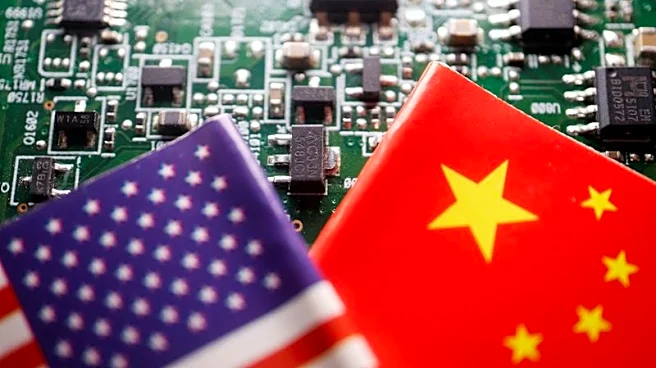
TSMC, a major supplier for companies like Apple, has halted some advanced chip orders for Chinese firms due to stricter United States semiconductor export restrictions. The revised regulations prevent TSMC from supplying Chinese companies with chips manufactured
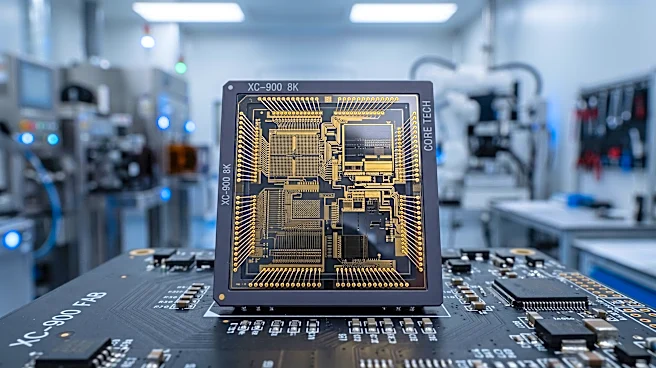
using processes smaller than 16nm, unless a U.S. export license or exemption is secured. This effectively limits Chinese companies to older chip technologies, specifically 28nm or 40nm processes, which are unsuitable for high-bandwidth memory (HBM) used in AI data centers. Previously, TSMC could assess chip designs for exemption eligibility, but now Chinese companies must obtain pre-approval. TSMC has informed its customers that orders for 16nm chips or smaller will remain suspended until U.S. approval is granted. The company has affirmed its commitment to complying with these new export controls, recognizing the potential severe repercussions, including financial penalties and the risk of losing business from key U.S. clients like Apple, AMD, and Nvidia, as well as access to essential U.S. electronic design automation (EDA) software.
Why It's Important?
These tightened U.S. export controls significantly impact the global semiconductor supply chain and the technological capabilities of Chinese companies. By restricting access to advanced chip technology, the U.S. aims to curb China's progress in critical areas such as artificial intelligence, where high-bandwidth memory is crucial. This move could also serve to protect U.S. companies like Nvidia, a leader in the AI chip market, from growing competition. For TSMC, compliance is paramount, as its business heavily relies on U.S. customers and access to U.S. technology. Non-compliance could jeopardize its relationships with major clients and its ability to produce advanced chips, given its dependence on U.S. EDA software. The restrictions create a challenging environment for Chinese technology companies, potentially slowing their innovation and development in advanced computing and AI, while reinforcing the U.S.'s strategic advantage in semiconductor technology.
What's Next?
Chinese companies seeking advanced chips from TSMC will now need to navigate a more stringent U.S. export license and exemption process. The suspension of orders for 16nm chips and smaller will remain in effect until these companies secure the necessary U.S. approvals. This shift is likely to prompt Chinese firms to explore alternative domestic chip manufacturing capabilities, though these may not yet match the advanced processes offered by TSMC. The U.S. government will continue to monitor and enforce these export controls, potentially adjusting them based on geopolitical and technological developments. The long-term implications could include a further decoupling of the U.S. and Chinese technology sectors, with both sides investing heavily in their respective domestic semiconductor industries to reduce reliance on foreign suppliers and technologies.
Beyond the Headlines
The U.S. export controls on advanced semiconductors to China extend beyond immediate economic and technological competition, touching upon broader geopolitical strategies. This policy reflects a concerted effort by the U.S. to maintain its technological leadership and address national security concerns related to China's military and surveillance capabilities. The restrictions highlight the critical role of semiconductors as a strategic asset in modern global power dynamics. The ethical dimension arises from the potential impact on global technological innovation, as limiting access to advanced technology could slow down progress in areas that benefit humanity, such as medical research or climate modeling, if those advancements are tied to restricted technologies. Furthermore, the move could accelerate the formation of distinct technological ecosystems, potentially leading to a more fragmented global tech landscape with differing standards and capabilities.